
Your Shoulders Hurt When You Sit? Stop Stretching—Start Understanding This Instead
Heather Otterbine
April 20, 2026
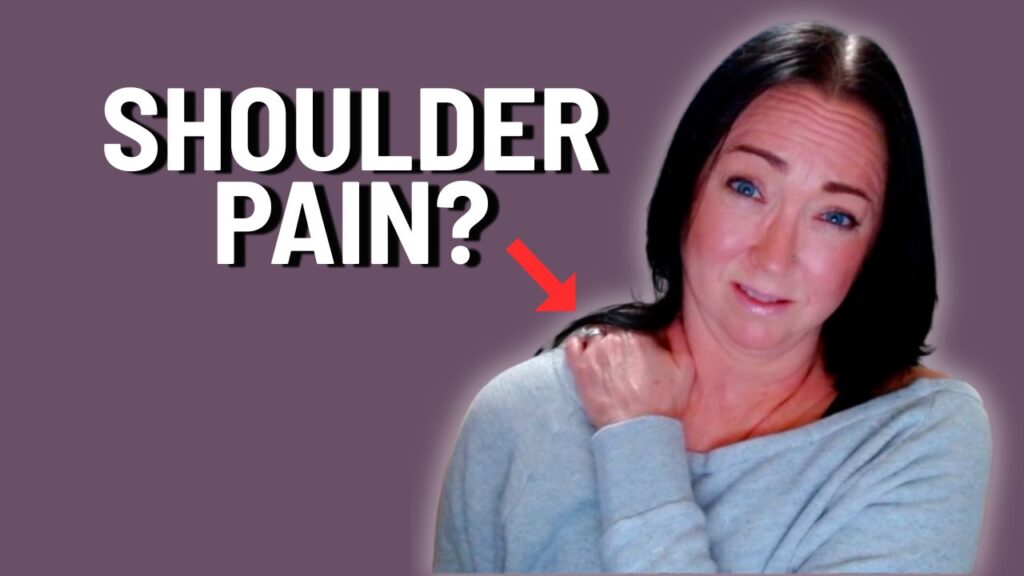
If your shoulders feel tight, achy, or uncomfortable—especially when you sit—you’re not alone.
And if your first instinct has been to stretch them…you’re also not alone there.
But here’s the truth:
👉 Tight doesn’t always mean short.
👉 And stretching isn’t always the solution.
In fact, for many people, it’s not solving the problem at all.
Let’s take a deeper look at what’s really happening—and what your body actually needs instead.
The First Mistake: Assuming Tight Means You Need to Stretch
When your shoulders feel tight, it’s easy to assume:
“I just need to stretch this out.”
So you reach across your body, pull your arm in, or try to open your chest.
It might feel good in the moment…but the tightness comes right back.
Why?
Because tightness isn’t always about length.
Sometimes, muscles feel tight because they are:
- underused
- weak
- or not coordinating well with the rest of the body
This is especially true in the shoulders.
What’s Really Happening: Tight Chest + Weak Upper Back
This is one of the most common patterns I see:
- The chest muscles gradually shorten
- The upper back muscles become underactive
- The shoulders drift slightly forward
This creates an imbalance.
And your body responds by creating tension—not because things are too short, but because things aren’t working well together.
So when you stretch the front of the shoulders without addressing the back?
You’re not actually solving the problem.
Why Sitting Makes This Worse
Now let’s layer in something most of us do every day:
Sitting!
If your shoulders hurt more when you sit…It’s not just because of posture.
It’s because of time and adaptation.
When you stay in one position for long periods:
- your body becomes more efficient at that position
- certain muscles become less active
- and others take on more strain
So even if you try to “correct” your posture…your body keeps pulling you back to what it knows.
This is important:
Your body doesn’t just reflect your posture—it adapts to it.
So it’s not just that you’re “sitting poorly”…it’s that your body is learning to function that way.
Why “Sitting Up Straight” Doesn’t Fix It
At some point, you’ve probably tried to correct this.
You sit up taller.
Pull your shoulders back.
Lift your chest.
And maybe it works…for a few minutes.
Then it feels tiring.
Or unnatural.
Or the discomfort returns.
That’s because you’re asking your body to hold a position it isn’t prepared to support.
And this is KEY…Posture isn’t something you force—it’s something you build.
The Shift: From Forcing Position → Building Support
Instead of thinking:
“I need better posture”
Try thinking:
“My body needs more support, more movement, and better balance.”
Because your shoulders don’t just need to be pulled back…
They need:
- muscles that can support them
- coordination between front and back body
- and a nervous system that knows how to use those muscles
What to Do Instead (Simple + Effective)
Here’s a simple approach you can start using right away:
1. Gently open the chest
Not aggressively—just enough to create space
2. Lightly activate the upper back
Think engagement, not gripping or forcing
3. Let the shoulders settle
Instead of pulling them back, allow them to rest in a supported position.
This isn’t about forcing your body into alignment.
It’s about building the capacity to support better alignment naturally.
A Better Way to Think About Shoulder Health
Your body is always adapting.
The goal isn’t to force it into a perfect position.
The goal is to:
- give it better input
- build strength and coordination
- and create more options for movement
Because when your body has more options…it doesn’t get stuck in discomfort as easily
Final Thought
If your shoulders feel tight…
It doesn’t mean you’re doing something wrong.
It means your body is adapting to how you’re using it.
And the good news?
That’s something you can change.
Want to Go Deeper?
If you’re interested in building strength, improving mobility, and supporting your body as you age…
I share more on this approach inside my:
Strong Bones, Healthy Aging Yoga + Fitness Training (COMING SOON!)
And here on the blog + YouTube, where we focus on:
strength • mobility • resilience
Related Videos
Similar Posts

October 26, 2026
What Happens When Life Stops Challenging Your Body?
The hidden tradeoff of convenience—and why keeping your options open matters as you age. We’ve gotten remarkably good at making life easier. We invented cars so we wouldn’t have to...

October 22, 2026
Yoga Teachers: Stop Confusing Popularity With Skill
Yoga Teachers: Stop Confusing Popularity With Skill Why a full classroom isn’t proof of excellent teaching—and an empty mat isn’t proof of failure. Some of the best yoga teachers I’ve...
October 19, 2026
Why Was This Getting Harder? Maybe Discipline Wasn’t the Problem.
There was a time when I was teaching ten to eighteen yoga and Pilates classes every week. I was active. I exercised regularly. I ate well. I understood the importance...

October 15, 2026
Your Yoga Practice Is Not Your Teaching Qualification
What your personal practice demonstrates—and what it doesn’t tell us about your ability to teach. Yoga teachers, can we talk about something that’s been kinda bugging me for years? Why...

October 12, 2026
Feeling Fine Isn’t the Same as Being Prepared
“I’ll worry about it when I have to.” I’ve heard people say that about their health and physical abilities for years. And I understand it. When nothing hurts and you’re...

October 8, 2026
Yoga Teachers, You Need Better Questions.
What if becoming a more confident yoga teacher isn’t about having more answers, but learning to ask better questions? 🎥 Prefer to watch? Sometimes the most useful thing a yoga...

October 5, 2026
Your Life Might Be Getting Easier—And That’s Not Always Good News
Your life might be getting easier. And that sounds like a good thing, right? In a lot of ways, it absolutely is. We have groceries delivered to our doors. We...

October 1, 2026
Knowing Anatomy Isn’t Enough: What Makes a Better Yoga Teacher?
You can know a whole lot of anatomy and still not know what to do with the person standing in front of you. Imagine you’re teaching a yoga class and...

September 27, 2026
Life Changes the Assignment: Is Your Body Ready?
Why preparing your body for everyday life means building more physical capacity than you currently need. 🎬 Prefer to Watch? Sometimes it’s easier to see an idea come to life...

September 23, 2026
A Good Yoga Teacher Doesn’t Need to Have All the Answers
A Good Yoga Teacher Doesn’t Need to Have All the Answers Has a student ever said something like: “I feel something weird in my knee when I do this.” And...