Body Literacy: The Skill That Gives You a Say in How You Age
Heather Otterbine
July 6, 2026
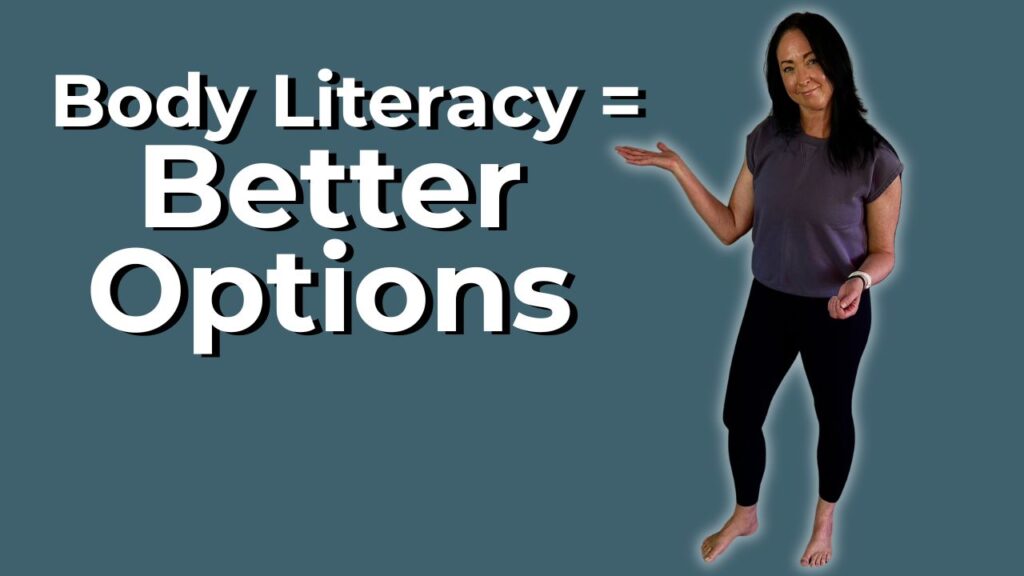
What if one of the most important skills you could develop as you age isn’t strength, flexibility, or even balance?
What if it’s learning to understand your body?
I call that Body Literacy.
And while it may sound like something reserved for healthcare professionals or anatomy textbooks, it’s actually much simpler—and much more practical—than that.
Body Literacy is the ability to notice what your body is telling you, understand what those signals might mean, and respond in a way that helps you continue living the life you want to live.
It’s not about becoming obsessed with every ache or pain.
It’s about becoming curious instead of critical.
You Have More Influence Than You Think
One of the biggest myths about aging is that everything simply happens to us.
Yes, there are things we can’t control. Genetics matter. Injuries happen. Life throws us unexpected challenges.
But there are also countless choices we make every day that quietly influence how we move through the years ahead.
That’s incredibly hopeful.
Because it means we aren’t powerless.
We have a say.
Not complete control—but meaningful influence.
And that influence begins with paying attention.
Your Body Is Always Giving You Information
Have you noticed that carrying the groceries feels a little easier than it did a few months ago?
Or maybe you’ve realized that getting up off the floor isn’t quite as effortless as it once was.
Perhaps you’re more winded walking up the stairs.
Or maybe you’ve been sleeping better, recovering faster after a busy day, or feeling steadier on uneven ground.
None of those observations are good or bad.
They’re simply information.
Your body is constantly communicating with you.
Body Literacy is learning to listen.
Awareness Isn’t Judgment
This is where so many people get stuck.
They notice something has changed and immediately tell themselves a story.
“I’m just getting old.”
“I guess this is what happens now.”
“There’s nothing I can do about it.”
But what if, instead, you became curious?
What if you asked:
“What is my body trying to tell me?”
That single question shifts the conversation.
Instead of judging yourself, you begin gathering information.
Instead of feeling discouraged, you begin seeing opportunities.
Maybe your balance needs a little more attention.
Maybe your strength has quietly improved.
Maybe your endurance isn’t where you’d like it to be.
Maybe your recovery deserves a little more care.
Body Literacy helps you recognize both your strengths and the areas that could benefit from a little more support.
Healthy Aging Isn’t About Perfection
I don’t believe healthy aging is about trying to become younger.
It’s not about chasing perfection or comparing yourself to someone else.
It’s about becoming more prepared for the life you’re living.
Can you comfortably carry your groceries?
Can you confidently climb the stairs?
Can you enjoy gardening, traveling, hiking, or playing with your children or grandchildren?
Can you recover well after a busy weekend?
Those are the movement demands of everyday life.
And just like any athlete prepares for the demands of their sport, we can prepare for the demands of ours.
That’s why I believe we’re all EveryDay Athletes.
The question isn’t whether you’re an athlete.
The question is whether you’re preparing your body for the life you want to keep living.
Start Where You Are
You don’t need a perfect plan.
You don’t need expensive equipment.
And you certainly don’t need to do everything at once.
Simply begin paying attention.
Notice what feels strong.
Notice what feels challenging.
Notice what has improved.
Notice what might need a little more support.
Because once you understand your body, you can begin working with it instead of feeling like you’re constantly working against it.
That’s the heart of Body Literacy.
And it’s one of the greatest gifts you can give your future self.
Want to dive deeper?
My newest YouTube video explores why I believe you’re already an EveryDay Athlete—and how changing the way you think about aging can change the way you move through life.
YouTube Video Lhttps://www.youtube.com/watch?v=tN7p3ki65UYink
And if you’re ready to take the first step, be sure to download my free EveryDay Athlete Checklist. It’s a simple guide to help you start recognizing opportunities to build strength, confidence, and resilience in your everyday life.
Similar Posts
October 26, 2026
What Happens When Life Stops Challenging Your Body?
The hidden tradeoff of convenience—and why keeping your options open matters as you age. We’ve gotten remarkably good at making life easier. We invented cars so we wouldn’t have to...

October 22, 2026
Yoga Teachers: Stop Confusing Popularity With Skill
Yoga Teachers: Stop Confusing Popularity With Skill Why a full classroom isn’t proof of excellent teaching—and an empty mat isn’t proof of failure. Some of the best yoga teachers I’ve...
October 19, 2026
Why Was This Getting Harder? Maybe Discipline Wasn’t the Problem.
There was a time when I was teaching ten to eighteen yoga and Pilates classes every week. I was active. I exercised regularly. I ate well. I understood the importance...
October 15, 2026
Your Yoga Practice Is Not Your Teaching Qualification
What your personal practice demonstrates—and what it doesn’t tell us about your ability to teach. Yoga teachers, can we talk about something that’s been kinda bugging me for years? Why...
October 12, 2026
Feeling Fine Isn’t the Same as Being Prepared
“I’ll worry about it when I have to.” I’ve heard people say that about their health and physical abilities for years. And I understand it. When nothing hurts and you’re...
October 8, 2026
Yoga Teachers, You Need Better Questions.
What if becoming a more confident yoga teacher isn’t about having more answers, but learning to ask better questions? 🎥 Prefer to watch? Sometimes the most useful thing a yoga...

October 5, 2026
Your Life Might Be Getting Easier—And That’s Not Always Good News
Your life might be getting easier. And that sounds like a good thing, right? In a lot of ways, it absolutely is. We have groceries delivered to our doors. We...
October 1, 2026
Knowing Anatomy Isn’t Enough: What Makes a Better Yoga Teacher?
You can know a whole lot of anatomy and still not know what to do with the person standing in front of you. Imagine you’re teaching a yoga class and...
September 27, 2026
Life Changes the Assignment: Is Your Body Ready?
Why preparing your body for everyday life means building more physical capacity than you currently need. 🎬 Prefer to Watch? Sometimes it’s easier to see an idea come to life...
September 23, 2026
A Good Yoga Teacher Doesn’t Need to Have All the Answers
A Good Yoga Teacher Doesn’t Need to Have All the Answers Has a student ever said something like: “I feel something weird in my knee when I do this.” And...