What Flamingoes and Weebles Can Teach Us About Aging Well
Heather Otterbine
June 22, 2026
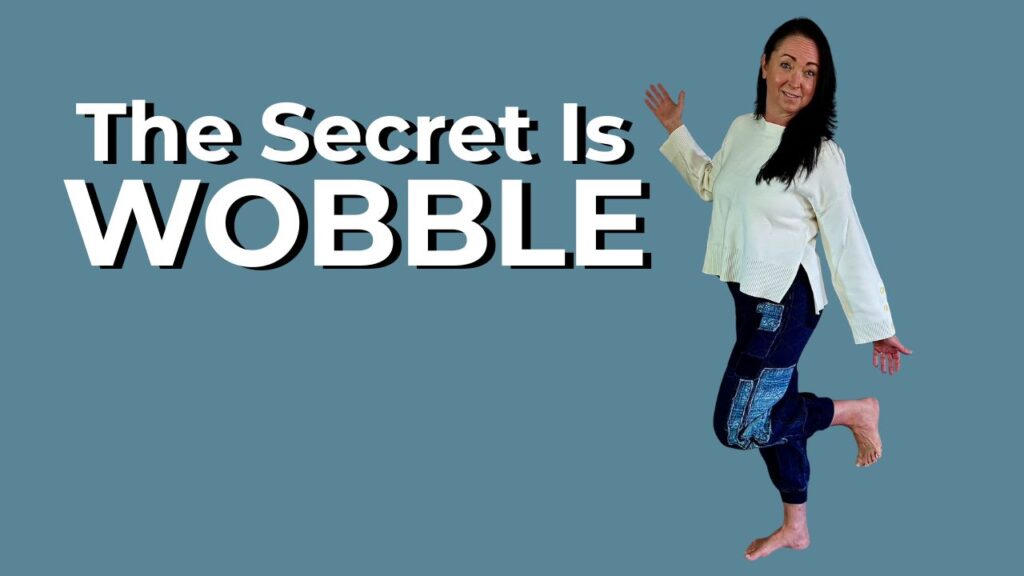
If you’re of a certain age, you probably remember the Weebles.
You know, those funny little toys that wobbled all over the place but somehow never fell down.
“Weebles wobble, but they don’t fall down!”
And if you’ve spent any time around me lately, you’ve also heard me talking about Flamingoes.
Not because I’m planning a career change into wildlife photography, but because standing on one leg can tell us a surprising amount about our balance and overall function.
At first glance, Flamingoes and Weebles don’t seem to have much in common.
One stands perfectly still on one leg.
The other spends its entire life wobbling.
But together, they might hold one of the most important lessons about healthy aging.
The Mistake Most People Make About Balance
When most people think about balance, they imagine standing perfectly still.
No movement.
No wobbling.
No mistakes.
If you’ve ever tried standing on one foot, you’ve probably judged yourself by how long you could stay completely steady.
But here’s the truth:
Balance isn’t the absence of movement.
Balance is the ability to respond to movement.
In fact, if you watch someone balancing well, they’re actually making hundreds of tiny adjustments every minute.
They’re constantly shifting, correcting, adapting, and responding.
They’re not frozen.
They’re adaptable.
🎥 Prefer to watch instead?
I dive deeper into this idea in my YouTube video, If Standing On One Foot Improved Balance, Flamingos Would Rule The World.
Watch the video here: YouTube Link
Be a Flamingo
The Flamingo represents something important.
It reminds us that balance is a skill.
Standing on one leg requires your muscles, joints, nervous system, vision, and brain to work together.
It’s not just a leg exercise.
It’s a communication exercise.
When you practice standing on one foot, you’re training your body to gather information and respond appropriately.
You’re building awareness.
You’re building coordination.
You’re building confidence.
And that’s valuable.
But it’s only half of the story.
Be a Weeble
Because life doesn’t happen while standing perfectly still in your living room.
Life happens when:
- The dog suddenly runs in front of you.
- You step on uneven ground.
- You miss a stair.
- You turn too quickly.
- You get bumped in a crowded space.
Real life is full of wobbles.
And that’s where the Weeble comes in.
The goal isn’t to never wobble.
The goal is to recover when you do.
Think about that for a moment.
The people who age well aren’t the people who never encounter challenges.
They’re the people who can adapt to challenges.
They recover.
They adjust.
They regain control.
They Weeble.
The Real Goal
Somewhere along the way, many of us were taught that successful aging means avoiding mistakes, avoiding limitations, and avoiding struggle.
But the body doesn’t work that way.
Healthy aging isn’t about becoming fragile enough that nothing ever goes wrong.
It’s about becoming resilient enough to handle what does.
That’s true for balance.
It’s true for movement.
And honestly, it’s true for life.
Your AHA Moment
What if balance isn’t about being a Flamingo?
What if it’s not about being a Weeble?
What if it’s about becoming both?
The Flamingo teaches us stability.
The Weeble teaches us recovery.
Together, they teach us resilience.
And resilience may be one of the most valuable skills we can carry into the future.
So the next time you practice standing on one leg, remember:
Don’t judge yourself by whether you wobble.
Pay attention to what happens next.
Because that’s where the magic is.
And that’s where healthy aging begins.
Ready to become more resilient, adaptable, and confident in your body?
Download my FREE EveryDay Athlete Checklist and discover the key skills that support healthy aging, functional longevity, and independence.
📋 Get the checklist here: Checklist Link
Because aging well isn’t about perfection.
It’s about building a body that’s ready for real life.
Similar Posts
October 26, 2026
What Happens When Life Stops Challenging Your Body?
The hidden tradeoff of convenience—and why keeping your options open matters as you age. We’ve gotten remarkably good at making life easier. We invented cars so we wouldn’t have to...

October 22, 2026
Yoga Teachers: Stop Confusing Popularity With Skill
Yoga Teachers: Stop Confusing Popularity With Skill Why a full classroom isn’t proof of excellent teaching—and an empty mat isn’t proof of failure. Some of the best yoga teachers I’ve...
October 19, 2026
Why Was This Getting Harder? Maybe Discipline Wasn’t the Problem.
There was a time when I was teaching ten to eighteen yoga and Pilates classes every week. I was active. I exercised regularly. I ate well. I understood the importance...
October 15, 2026
Your Yoga Practice Is Not Your Teaching Qualification
What your personal practice demonstrates—and what it doesn’t tell us about your ability to teach. Yoga teachers, can we talk about something that’s been kinda bugging me for years? Why...
October 12, 2026
Feeling Fine Isn’t the Same as Being Prepared
“I’ll worry about it when I have to.” I’ve heard people say that about their health and physical abilities for years. And I understand it. When nothing hurts and you’re...
October 8, 2026
Yoga Teachers, You Need Better Questions.
What if becoming a more confident yoga teacher isn’t about having more answers, but learning to ask better questions? 🎥 Prefer to watch? Sometimes the most useful thing a yoga...

October 5, 2026
Your Life Might Be Getting Easier—And That’s Not Always Good News
Your life might be getting easier. And that sounds like a good thing, right? In a lot of ways, it absolutely is. We have groceries delivered to our doors. We...
October 1, 2026
Knowing Anatomy Isn’t Enough: What Makes a Better Yoga Teacher?
You can know a whole lot of anatomy and still not know what to do with the person standing in front of you. Imagine you’re teaching a yoga class and...
September 27, 2026
Life Changes the Assignment: Is Your Body Ready?
Why preparing your body for everyday life means building more physical capacity than you currently need. 🎬 Prefer to Watch? Sometimes it’s easier to see an idea come to life...
September 23, 2026
A Good Yoga Teacher Doesn’t Need to Have All the Answers
A Good Yoga Teacher Doesn’t Need to Have All the Answers Has a student ever said something like: “I feel something weird in my knee when I do this.” And...