Aging Can Feel Scary—But Here’s What We Can Control
Heather Otterbine
June 8, 2026
June 9, 2026
Aging Can Feel Scary—But Here’s What We Can Control
Let’s be honest for a minute.
Aging can feel scary.
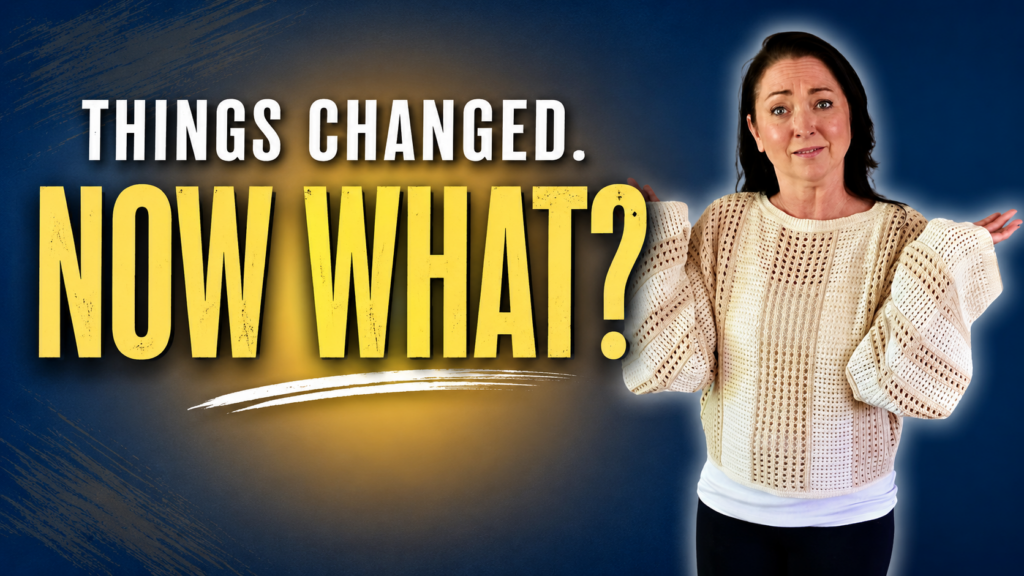
Things change. Sometimes very unexpectedly.
You wake up one morning and your joints feel stiffer than they used to.
You gain weight without really understanding why.
You walk into a room and completely forget what you came in there for.
You sleep all night and still wake up feeling like you’ve never gotten enough sleep.
If any of that sounds familiar, you’re not alone.
In fact, I was talking with one of my students recently, and she mentioned the unexpected weight gain that seemed to happen almost overnight. She hadn’t changed much, but her body felt different.
And I think one of the biggest mistakes people make when talking about healthy aging is jumping straight into solutions before acknowledging what people are actually experiencing.
Before we talk about what to do, we have to acknowledge how many people are feeling.
Frustrated.
Confused.
Discouraged.
Sometimes even a little scared.
The truth is, our bodies do change.
Hormones change.
Recovery changes.
Life changes.
Pretending otherwise isn’t helpful.
But I also don’t believe that aging and decline are the same thing.
And that’s a distinction worth talking about.
The Trigger Finger That Taught Me an Important Lesson
A few years ago, I woke up one morning and my pointer finger hurt so badly that I couldn’t straighten it.
I couldn’t put weight on it.
Which is a little concerning when you’re teaching yoga classes for a living.
I remember trying to demonstrate poses and thinking:
“Well…this is inconvenient.”
Mike went to the store and bought me a finger splint.
I wore it.
And wore it.
And wore it.
Nothing changed.
The finger still hurt.
I still couldn’t straighten it.
And I remember wondering:
“What is happening?”
Eventually, I was talking with a friend who’s about ten years older than I am.
I described what was going on and she said:
“Oh, you mean trigger finger?”
I said:
“What?”
She said:
“Trigger finger.”
Now, I had heard the term before.
But I thought trigger finger had something to do with guns and action movies.
Not me.
Not my hand.
Not my random Tuesday morning.
She explained what it was, and I remember thinking:
Wait a minute…shouldn’t this be common knowledge?
Shouldn’t somebody have told us this was a thing?
And that’s when something clicked for me.
My finger didn’t magically get better because I learned what trigger finger was.
But something did change.
I stopped assuming something terrible was happening.
I had context.
I understood what was going on.
Sometimes Understanding Comes Before Solutions
I think that’s true for a lot of aging.
Sometimes understanding comes before solutions.
Sometimes what people need first isn’t another exercise program.
Or another supplement.
Or another promise.
Sometimes they need someone to say:
“Yes, that can happen.”
“No, you’re not the only one.”
“And here’s what we know about it.”
Because when we don’t understand what’s happening inside our bodies, it’s easy to assume the worst.
But when we understand what’s happening, fear often gives way to curiosity.
And curiosity is a much better place to begin.
Why I’m Passionate About Body Literacy
That’s one of the reasons I’m so passionate about functional movement and what I call Body Literacy.
Not because I think everyone needs to become an anatomy expert.
But because I think understanding your body changes your relationship with your body.
Understanding reduces fear.
Knowledge creates options.
Options create confidence.
And confidence changes how we move through the world.
Body Literacy is simply the process of learning enough about your body to make informed decisions about your health, movement, and well-being.
You don’t need a medical degree.
You don’t need to memorize anatomy charts.
You just need enough understanding to stop feeling like your body is a mystery.
What We Can Still Build
When we talk about healthy aging, I think we spend too much time focusing on what we’re losing and not enough time focusing on what we’re still capable of building.
We can build strength.
We can build balance.
We can build mobility.
We can build coordination.
We can build resilience.
We can build movement confidence.
We can build adaptability.
And perhaps most importantly, we can build a better understanding of ourselves.
Healthy aging isn’t about pretending nothing changes.
Healthy aging is about learning which changes we can influence.
Because there are things we can’t control.
But there are also many things we can.
And that’s where the power lives.
Not in denying reality.
Not in fighting aging.
But in participating in the process.
Learning.
Adapting.
Growing.
Continuing to build capacity for the life you want to live.
A More Empowering Story About Aging
I think that’s a much more empowering story.
And it’s one that I want more people to hear.
Because you are not powerless.
Your body is still listening.
It’s still adapting.
It’s still responding to the choices you make every day.
And that means there is far more possibility ahead of you than you may realize.
Aging isn’t the end of the story.
It’s simply a new chapter.
And like every chapter, there are things to learn, skills to develop, and opportunities to grow.
The goal isn’t to stop aging.
The goal is to continue building the strength, resilience, confidence, and adaptability that allow you to fully participate in your life.
That’s what healthy aging means to me.
And that’s why I believe understanding your body may be one of the most powerful things you can do for your future self.
Ready to Get Started?
I’ve created a FREE Functional Movement Home Toolkit filled with some of my favorite tools and resources to help you improve strength, balance, mobility, and movement confidence at home.
Grab your free copy below and take the first step toward building a stronger, more resilient future.
Similar Posts
October 26, 2026
What Happens When Life Stops Challenging Your Body?
The hidden tradeoff of convenience—and why keeping your options open matters as you age. We’ve gotten remarkably good at making life easier. We invented cars so we wouldn’t have to...

October 22, 2026
Yoga Teachers: Stop Confusing Popularity With Skill
Yoga Teachers: Stop Confusing Popularity With Skill Why a full classroom isn’t proof of excellent teaching—and an empty mat isn’t proof of failure. Some of the best yoga teachers I’ve...
October 19, 2026
Why Was This Getting Harder? Maybe Discipline Wasn’t the Problem.
There was a time when I was teaching ten to eighteen yoga and Pilates classes every week. I was active. I exercised regularly. I ate well. I understood the importance...
October 15, 2026
Your Yoga Practice Is Not Your Teaching Qualification
What your personal practice demonstrates—and what it doesn’t tell us about your ability to teach. Yoga teachers, can we talk about something that’s been kinda bugging me for years? Why...
October 12, 2026
Feeling Fine Isn’t the Same as Being Prepared
“I’ll worry about it when I have to.” I’ve heard people say that about their health and physical abilities for years. And I understand it. When nothing hurts and you’re...

October 8, 2026
Yoga Teachers, You Need Better Questions.
What if becoming a more confident yoga teacher isn’t about having more answers, but learning to ask better questions? 🎥 Prefer to watch? Sometimes the most useful thing a yoga...

October 5, 2026
Your Life Might Be Getting Easier—And That’s Not Always Good News
Your life might be getting easier. And that sounds like a good thing, right? In a lot of ways, it absolutely is. We have groceries delivered to our doors. We...
October 1, 2026
Knowing Anatomy Isn’t Enough: What Makes a Better Yoga Teacher?
You can know a whole lot of anatomy and still not know what to do with the person standing in front of you. Imagine you’re teaching a yoga class and...
September 27, 2026
Life Changes the Assignment: Is Your Body Ready?
Why preparing your body for everyday life means building more physical capacity than you currently need. 🎬 Prefer to Watch? Sometimes it’s easier to see an idea come to life...
September 23, 2026
A Good Yoga Teacher Doesn’t Need to Have All the Answers
A Good Yoga Teacher Doesn’t Need to Have All the Answers Has a student ever said something like: “I feel something weird in my knee when I do this.” And...