
Why Stretching Isn’t Always the Answer
Heather Otterbine
July 26, 2026
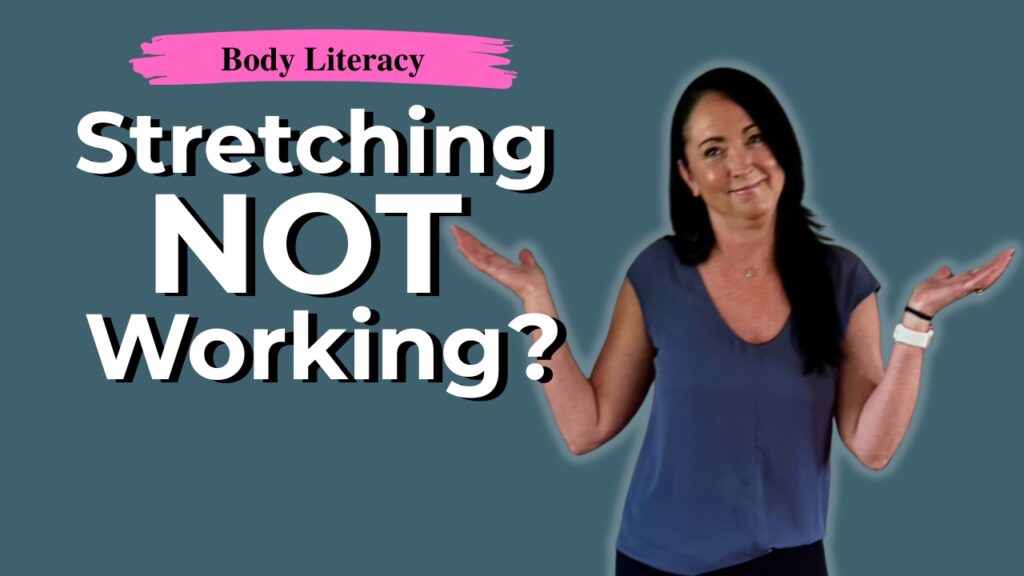
Have you ever noticed that the same part of your body always feels tight?
Maybe it’s your neck after a long day at the computer. Your shoulders while you’re driving. Your hamstrings every time you bend over. Or perhaps it’s your calves after a walk.
So you do what most of us have been taught to do—you stretch.
Maybe it feels better for a little while.
But then the tightness comes right back.
If that sounds familiar, you’re not alone.
Tight Doesn’t Always Mean Short
One of the biggest misconceptions about the body is the idea that a tight muscle automatically needs to be stretched.
Sometimes that’s true.
But sometimes, a muscle feels tight because it’s been working harder than it was designed to.
Our bodies are remarkably adaptable. When one area isn’t contributing as well as it could, another area often steps in to help. This is called compensation, and it’s one of the ways your body keeps you moving through everyday life.
Compensation isn’t a sign that your body is failing—it’s actually evidence of how resourceful it is.
The challenge is that muscles doing extra work often become tired, overworked, and yes…tight.
Stretching that muscle may provide temporary relief, but it doesn’t always address why it became tight in the first place.
A Different Way to Think About Tightness
Imagine a coworker who quietly picks up extra responsibilities every time someone else is absent.
They answer more emails, take more phone calls, and handle additional projects.
Eventually they’re exhausted.
Would we assume they’re tired because they aren’t capable?
Probably not.
We’d recognize that they’ve simply been carrying more than their share of the workload.
Our muscles often work the same way.
Sometimes the muscle you’re stretching isn’t the problem at all—it’s simply the one working overtime because another part of your body isn’t contributing as efficiently as it could.
The Hamstring Example
This is something I’ve seen countless times while teaching yoga and functional movement.
A student tells me their hamstrings are always tight.
I ask what they’ve been doing.
The answer is almost always the same:
“I’ve been stretching them.”
Sometimes stretching is exactly what helps.
But sometimes what those hamstrings really need isn’t more length—they need more support.
Perhaps the hips aren’t moving well. Maybe the pelvis isn’t contributing as efficiently as it could. In some cases, the body simply needs more strength and coordination rather than additional flexibility.
That’s one of the reasons I believe a healthy movement practice should include both mobility and strength.
Stretching Is Still Valuable
None of this means stretching is bad.
Far from it.
Stretching can improve mobility, reduce stiffness, and simply feel wonderful.
The point isn’t to stop stretching.
The point is to stop assuming stretching is always the answer.
Sometimes your body needs mobility.
Sometimes it needs strength.
Sometimes it needs better coordination.
Sometimes it simply needs another part of your body to start doing its share.
A Simple Question That Changes Everything
The next time something feels tight, pause before reaching for your favorite stretch.
Instead, ask yourself:
- Has this area been tight for a long time?
- Does the tightness always come back?
- Could this muscle be working harder than it was designed to?
- Is another part of my body contributing as well as it could?
You may still decide to stretch—and that’s perfectly okay.
But now you’re making that decision from a place of curiosity instead of habit.
That’s the heart of Body Literacy.
The Goal Isn’t More Stretching. It’s Better Understanding.
Our bodies are constantly adapting to the demands we place on them.
The more we understand those adaptations, the better decisions we can make about how we move, exercise, and care for ourselves.
Instead of chasing symptoms, we can begin understanding patterns.
Instead of assuming our bodies are working against us, we can recognize that they’re doing their best to help us.
Sometimes, the tightest muscle in your body isn’t asking for another stretch.
Sometimes…
it’s simply asking for a little help.
Continue Your Body Literacy Journey
If this article made you look at stretching a little differently, you’re already beginning to develop one of the most valuable skills you can have—learning to understand why your body feels the way it does instead of simply reacting to symptoms.
If you’d like to go deeper, here are two resources I think you’ll enjoy:
📖 The EveryDay Athlete Field Guide
My book, The EveryDay Athlete Field Guide, explores the principles of Body Literacy in greater depth and helps you better understand how your body adapts, compensates, and communicates through movement.
➡️ Get your copy here: The EveryDay Athlete Field Guide on Amazon
🎓 The EveryDay Athlete Mini-Course
If you’re ready to move beyond reading and begin applying these concepts, the EveryDay Athlete Mini-Course will guide you through the foundations of Body Literacy with practical lessons designed to help you move with greater confidence and understanding.
➡️ Learn more here: The EveryDay Athlete Mini-Course
Watch the Full Video
Prefer to watch instead?
In this week’s Body Literacy video, I walk through these ideas in more detail—including common examples like tight shoulders and stubborn hamstrings—and explain why stretching isn’t always the answer.
➡️ Watch the full YouTube video here: Why Stretching Isn’t Always The Answer
Similar Posts

October 26, 2026
What Happens When Life Stops Challenging Your Body?
The hidden tradeoff of convenience—and why keeping your options open matters as you age. We’ve gotten remarkably good at making life easier. We invented cars so we wouldn’t have to...

October 22, 2026
Yoga Teachers: Stop Confusing Popularity With Skill
Yoga Teachers: Stop Confusing Popularity With Skill Why a full classroom isn’t proof of excellent teaching—and an empty mat isn’t proof of failure. Some of the best yoga teachers I’ve...
October 19, 2026
Why Was This Getting Harder? Maybe Discipline Wasn’t the Problem.
There was a time when I was teaching ten to eighteen yoga and Pilates classes every week. I was active. I exercised regularly. I ate well. I understood the importance...

October 15, 2026
Your Yoga Practice Is Not Your Teaching Qualification
What your personal practice demonstrates—and what it doesn’t tell us about your ability to teach. Yoga teachers, can we talk about something that’s been kinda bugging me for years? Why...

October 12, 2026
Feeling Fine Isn’t the Same as Being Prepared
“I’ll worry about it when I have to.” I’ve heard people say that about their health and physical abilities for years. And I understand it. When nothing hurts and you’re...

October 8, 2026
Yoga Teachers, You Need Better Questions.
What if becoming a more confident yoga teacher isn’t about having more answers, but learning to ask better questions? 🎥 Prefer to watch? Sometimes the most useful thing a yoga...

October 5, 2026
Your Life Might Be Getting Easier—And That’s Not Always Good News
Your life might be getting easier. And that sounds like a good thing, right? In a lot of ways, it absolutely is. We have groceries delivered to our doors. We...

October 1, 2026
Knowing Anatomy Isn’t Enough: What Makes a Better Yoga Teacher?
You can know a whole lot of anatomy and still not know what to do with the person standing in front of you. Imagine you’re teaching a yoga class and...

September 27, 2026
Life Changes the Assignment: Is Your Body Ready?
Why preparing your body for everyday life means building more physical capacity than you currently need. 🎬 Prefer to Watch? Sometimes it’s easier to see an idea come to life...

September 23, 2026
A Good Yoga Teacher Doesn’t Need to Have All the Answers
A Good Yoga Teacher Doesn’t Need to Have All the Answers Has a student ever said something like: “I feel something weird in my knee when I do this.” And...