
Why Your Knees Keep Hurting (And What Most People Miss)
Heather Otterbine
March 30, 2026
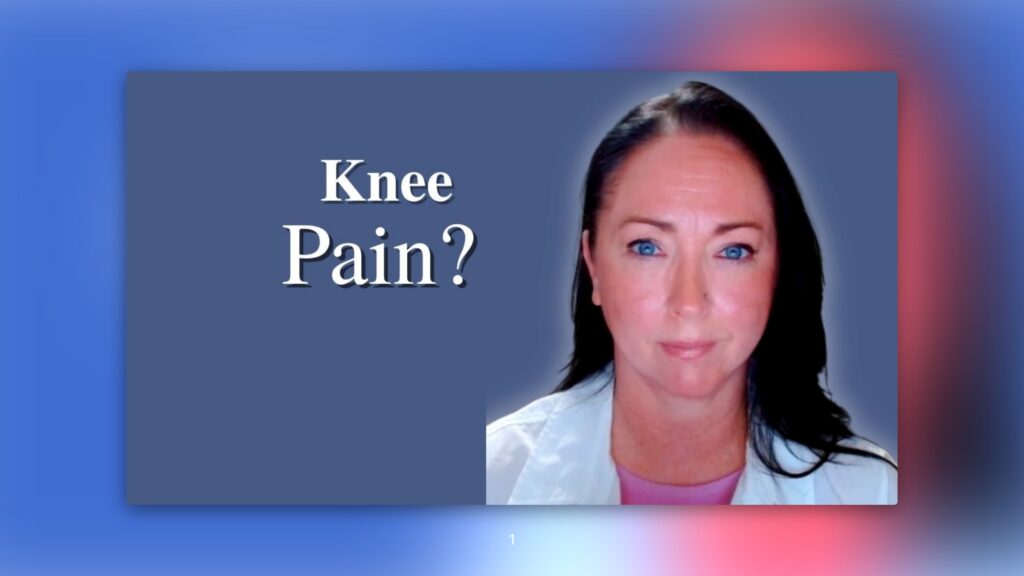
At some point in life…almost everyone deals with knee pain.
And there are a lot of reasons for that—sports, daily movement patterns, lack of movement, and even hormonal changes.
Some of those things we can’t control.
But some of them…we absolutely can.
And the difference in how your body feels—and how you age—often comes down to whether or not you’re working on the things you can influence.
One of the biggest misconceptions about knee pain is that the knee itself is the problem.
But in many cases, the knee is simply responding to what’s happening above it and below it.
Why Your Knees Collapse In (And Why It Matters)
If your knees tend to fall inward when you squat, step, or move through daily life, this is often a sign of weakness or lack of control at the hips.
👉Stop Letting Your Knees Collapse Like This!
This pattern—often called knee valgus—places additional stress on the knee joint, especially over time.
But the knee isn’t creating the problem…It’s responding to instability elsewhere.
The Common Mistake That Keeps Your Knees Struggling
Many people try to “fix” their knees by focusing only on the knee itself—stretching it, bracing it, or avoiding movement altogether.
👉 This Common Mistake Is Hurting Your Knees
But without addressing how your body moves as a system, those approaches often fall short.
Real change comes from improving how your body controls movement—not just where you feel discomfort.
Why Some Stretches Can Make Knee Pain Worse
Certain movements—like forcing your way into a deep pigeon pose—can actually put unnecessary strain on the knee.
👉 Stop Doing Pigeon Pose Like This! (It’s Hurting Your Knee)
This is especially true when the hip doesn’t have the mobility to support the position.
When that happens, the knee takes on movement it was never designed to handle.
Your Knee Isn’t the Problem—It’s the Messenger
Your knees sit between the foot and the hip.
Which means they often absorb the effects of what’s happening around them.
When your foot isn’t stable…
When your hip isn’t strong or mobile enough…your knee feels it.
And one of the most overlooked factors in knee health?
Balance and stability.
Your ability to control your body—especially on one leg—plays a huge role in how your knees function and feel.
That’s exactly what we’re going to start exploring next.
You don’t need to avoid movement to protect your knees. You need to understand how your body works—and train it to support you.
Because when you do that, you’re not just addressing knee pain…you’re improving how you move, how you feel, and how you age.
Similar Posts
October 26, 2026
What Happens When Life Stops Challenging Your Body?
The hidden tradeoff of convenience—and why keeping your options open matters as you age. We’ve gotten remarkably good at making life easier. We invented cars so we wouldn’t have to...

October 22, 2026
Yoga Teachers: Stop Confusing Popularity With Skill
Yoga Teachers: Stop Confusing Popularity With Skill Why a full classroom isn’t proof of excellent teaching—and an empty mat isn’t proof of failure. Some of the best yoga teachers I’ve...

October 19, 2026
Why Was This Getting Harder? Maybe Discipline Wasn’t the Problem.
There was a time when I was teaching ten to eighteen yoga and Pilates classes every week. I was active. I exercised regularly. I ate well. I understood the importance...

October 15, 2026
Your Yoga Practice Is Not Your Teaching Qualification
What your personal practice demonstrates—and what it doesn’t tell us about your ability to teach. Yoga teachers, can we talk about something that’s been kinda bugging me for years? Why...

October 12, 2026
Feeling Fine Isn’t the Same as Being Prepared
“I’ll worry about it when I have to.” I’ve heard people say that about their health and physical abilities for years. And I understand it. When nothing hurts and you’re...

October 8, 2026
Yoga Teachers, You Need Better Questions.
What if becoming a more confident yoga teacher isn’t about having more answers, but learning to ask better questions? 🎥 Prefer to watch? Sometimes the most useful thing a yoga...

October 5, 2026
Your Life Might Be Getting Easier—And That’s Not Always Good News
Your life might be getting easier. And that sounds like a good thing, right? In a lot of ways, it absolutely is. We have groceries delivered to our doors. We...
October 1, 2026
Knowing Anatomy Isn’t Enough: What Makes a Better Yoga Teacher?
You can know a whole lot of anatomy and still not know what to do with the person standing in front of you. Imagine you’re teaching a yoga class and...
September 27, 2026
Life Changes the Assignment: Is Your Body Ready?
Why preparing your body for everyday life means building more physical capacity than you currently need. 🎬 Prefer to Watch? Sometimes it’s easier to see an idea come to life...
September 23, 2026
A Good Yoga Teacher Doesn’t Need to Have All the Answers
A Good Yoga Teacher Doesn’t Need to Have All the Answers Has a student ever said something like: “I feel something weird in my knee when I do this.” And...