
Why Your Balance Feels Off (And What’s Actually Causing It)
Heather Otterbine
April 6, 2026
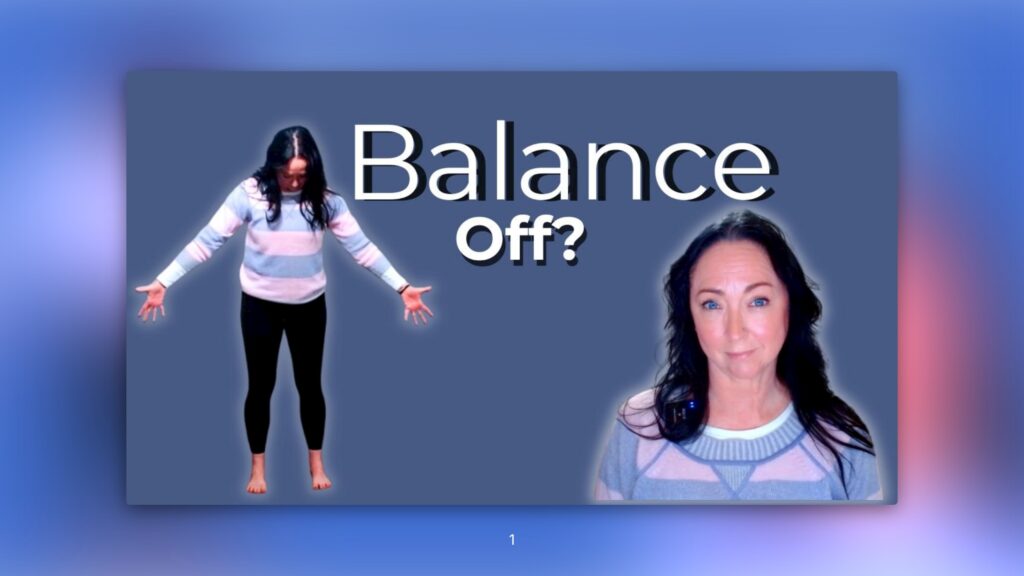
If your balance feels off lately, you’re not alone.
Maybe you’ve noticed:
- you feel a little less steady when walking
- balance poses feel harder than they used to
- you wobble more than expected
- or you just don’t feel as confident in your body
Most people assume this means:
“My balance is getting worse.”
But here’s the truth:
Balance isn’t the problem.
It’s the result.
And when you understand what actually creates balance in the body, everything starts to make a lot more sense.
Balance Is Not Just One Thing
Balance is often treated like a single ability—something you either have or don’t.
But in reality, balance is a complex system that relies on multiple inputs working together:
- sensory awareness (proprioception)
- strength
- joint stability
- mobility
- coordination
- reaction time
Your body is constantly:
👉 gathering information
👉 processing it
👉 and making micro-adjustments in real time
So when balance feels off, it’s not random.
It means something in that system isn’t working as well as it could.
The Missing Piece Most People Overlook
One of the most important—and most overlooked—parts of balance is:
the quality of information your body is receiving
This is where proprioception comes in.
Proprioception is your body’s ability to sense:
- where you are in space
- how your weight is distributed
- and how to adjust as things change
It’s what allows you to move without constantly looking at your feet or thinking through every step.
But here’s the key:
Your brain can only work with the information it receives.
If that input is unclear, delayed, or limited…your balance will feel less stable
Why Your Feet Matter More Than You Think
Your feet are one of the primary sources of that information.
They are packed with sensory receptors that constantly communicate with your brain.
They tell your body:
- how you’re standing
- where your weight is
- how to respond to changes in surface or movement
But in modern life, we don’t use our feet the way they were designed to be used.
We spend most of our time:
- in shoes
- on flat, predictable surfaces
- moving in repetitive patterns
Over time, this can lead to:
- decreased foot strength
- reduced responsiveness
- less accurate sensory input
And when that happens…
your balance system has less to work with
What Happens When the System Breaks Down
When your feet aren’t providing strong, clear input:
- your ankles become less responsive
- your knees begin to compensate
- your hips lose stability
- and your body becomes slower to react
So now…
Balance doesn’t feel automatic anymore.
It feels:
- wobbly
- inconsistent
- unpredictable
Not because you “can’t balance”…
But because your body is constantly trying to catch up.
Why This Becomes More Noticeable With Age
As we age, a few natural changes occur:
- reaction time slows slightly
- strength can decrease
- we rely more on coordination and efficiency
That doesn’t mean balance has to decline.
But it does mean:
we need better input and better support from the body
If the foundation—your feet—aren’t doing their job…
Everything above it has to work harder.
A Simple Way to Start Improving Your Balance
The good news?
Balance is a skill.
And like any skill…
👉 it can be trained
👉 it can be improved
👉 it can come back
You don’t need complicated exercises to begin.
Start with awareness.
Next time you’re standing:
gently press into:
- The mound under your big toe
- The mound under your little toe
- And your heel
This creates a more active, responsive foot.
Not gripping. Not forcing.
Simply waking the system up!
And from there, your body has better information to work with.
Balance Is Built From the Ground Up
If you take one thing from this, let it be this:
Balance is not something you either have or don’t have.
It’s something your body is constantly creating.
And when you improve the input…you improve the output
What’s Next
In this post, we focused on one key piece of the puzzle…your feet
But balance doesn’t stop there.
Next, we move up the chain and take a look at your hips!
Because even if your feet are doing their job…
Without strength and stability at the hips, balance will still feel shaky.
🎬 Watch the Full Video Breakdown
If you want to see this explained and demonstrated step-by-step:
👉 The #1 Thing Throwing Off Your Balance (It Starts at Your Feet)
Final Thoughts
You don’t need to accept feeling unsteady as “just part of aging.”
With the right understanding and a few simple shifts, your body can become:
- more stable
- more responsive
- and more confident
And it all starts with awareness.
Similar Posts
October 26, 2026
What Happens When Life Stops Challenging Your Body?
The hidden tradeoff of convenience—and why keeping your options open matters as you age. We’ve gotten remarkably good at making life easier. We invented cars so we wouldn’t have to...

October 22, 2026
Yoga Teachers: Stop Confusing Popularity With Skill
Yoga Teachers: Stop Confusing Popularity With Skill Why a full classroom isn’t proof of excellent teaching—and an empty mat isn’t proof of failure. Some of the best yoga teachers I’ve...

October 19, 2026
Why Was This Getting Harder? Maybe Discipline Wasn’t the Problem.
There was a time when I was teaching ten to eighteen yoga and Pilates classes every week. I was active. I exercised regularly. I ate well. I understood the importance...

October 15, 2026
Your Yoga Practice Is Not Your Teaching Qualification
What your personal practice demonstrates—and what it doesn’t tell us about your ability to teach. Yoga teachers, can we talk about something that’s been kinda bugging me for years? Why...

October 12, 2026
Feeling Fine Isn’t the Same as Being Prepared
“I’ll worry about it when I have to.” I’ve heard people say that about their health and physical abilities for years. And I understand it. When nothing hurts and you’re...

October 8, 2026
Yoga Teachers, You Need Better Questions.
What if becoming a more confident yoga teacher isn’t about having more answers, but learning to ask better questions? 🎥 Prefer to watch? Sometimes the most useful thing a yoga...

October 5, 2026
Your Life Might Be Getting Easier—And That’s Not Always Good News
Your life might be getting easier. And that sounds like a good thing, right? In a lot of ways, it absolutely is. We have groceries delivered to our doors. We...
October 1, 2026
Knowing Anatomy Isn’t Enough: What Makes a Better Yoga Teacher?
You can know a whole lot of anatomy and still not know what to do with the person standing in front of you. Imagine you’re teaching a yoga class and...
September 27, 2026
Life Changes the Assignment: Is Your Body Ready?
Why preparing your body for everyday life means building more physical capacity than you currently need. 🎬 Prefer to Watch? Sometimes it’s easier to see an idea come to life...
September 23, 2026
A Good Yoga Teacher Doesn’t Need to Have All the Answers
A Good Yoga Teacher Doesn’t Need to Have All the Answers Has a student ever said something like: “I feel something weird in my knee when I do this.” And...