Why Stretching Isn’t Always the Answer
Heather Otterbine
July 26, 2026
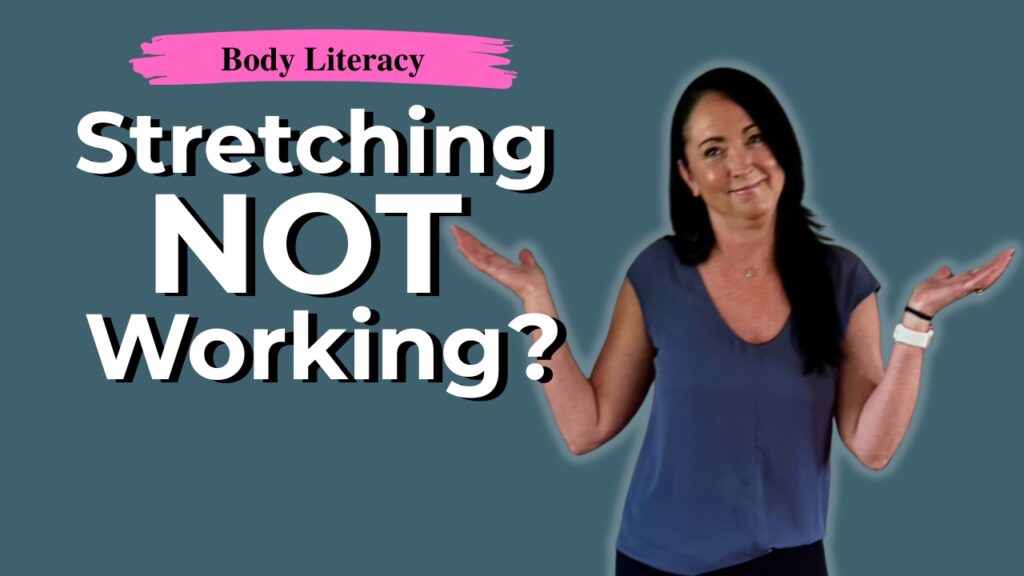
Have you ever noticed that the same part of your body always feels tight?
Maybe it’s your neck after a long day at the computer. Your shoulders while you’re driving. Your hamstrings every time you bend over. Or perhaps it’s your calves after a walk.
So you do what most of us have been taught to do—you stretch.
Maybe it feels better for a little while.
But then the tightness comes right back.
If that sounds familiar, you’re not alone.
Tight Doesn’t Always Mean Short
One of the biggest misconceptions about the body is the idea that a tight muscle automatically needs to be stretched.
Sometimes that’s true.
But sometimes, a muscle feels tight because it’s been working harder than it was designed to.
Our bodies are remarkably adaptable. When one area isn’t contributing as well as it could, another area often steps in to help. This is called compensation, and it’s one of the ways your body keeps you moving through everyday life.
Compensation isn’t a sign that your body is failing—it’s actually evidence of how resourceful it is.
The challenge is that muscles doing extra work often become tired, overworked, and yes…tight.
Stretching that muscle may provide temporary relief, but it doesn’t always address why it became tight in the first place.
A Different Way to Think About Tightness
Imagine a coworker who quietly picks up extra responsibilities every time someone else is absent.
They answer more emails, take more phone calls, and handle additional projects.
Eventually they’re exhausted.
Would we assume they’re tired because they aren’t capable?
Probably not.
We’d recognize that they’ve simply been carrying more than their share of the workload.
Our muscles often work the same way.
Sometimes the muscle you’re stretching isn’t the problem at all—it’s simply the one working overtime because another part of your body isn’t contributing as efficiently as it could.
The Hamstring Example
This is something I’ve seen countless times while teaching yoga and functional movement.
A student tells me their hamstrings are always tight.
I ask what they’ve been doing.
The answer is almost always the same:
“I’ve been stretching them.”
Sometimes stretching is exactly what helps.
But sometimes what those hamstrings really need isn’t more length—they need more support.
Perhaps the hips aren’t moving well. Maybe the pelvis isn’t contributing as efficiently as it could. In some cases, the body simply needs more strength and coordination rather than additional flexibility.
That’s one of the reasons I believe a healthy movement practice should include both mobility and strength.
Stretching Is Still Valuable
None of this means stretching is bad.
Far from it.
Stretching can improve mobility, reduce stiffness, and simply feel wonderful.
The point isn’t to stop stretching.
The point is to stop assuming stretching is always the answer.
Sometimes your body needs mobility.
Sometimes it needs strength.
Sometimes it needs better coordination.
Sometimes it simply needs another part of your body to start doing its share.
A Simple Question That Changes Everything
The next time something feels tight, pause before reaching for your favorite stretch.
Instead, ask yourself:
- Has this area been tight for a long time?
- Does the tightness always come back?
- Could this muscle be working harder than it was designed to?
- Is another part of my body contributing as well as it could?
You may still decide to stretch—and that’s perfectly okay.
But now you’re making that decision from a place of curiosity instead of habit.
That’s the heart of Body Literacy.
The Goal Isn’t More Stretching. It’s Better Understanding.
Our bodies are constantly adapting to the demands we place on them.
The more we understand those adaptations, the better decisions we can make about how we move, exercise, and care for ourselves.
Instead of chasing symptoms, we can begin understanding patterns.
Instead of assuming our bodies are working against us, we can recognize that they’re doing their best to help us.
Sometimes, the tightest muscle in your body isn’t asking for another stretch.
Sometimes…
it’s simply asking for a little help.
Continue Your Body Literacy Journey
If this article made you look at stretching a little differently, you’re already beginning to develop one of the most valuable skills you can have—learning to understand why your body feels the way it does instead of simply reacting to symptoms.
If you’d like to go deeper, here are two resources I think you’ll enjoy:
📖 The EveryDay Athlete Field Guide
My book, The EveryDay Athlete Field Guide, explores the principles of Body Literacy in greater depth and helps you better understand how your body adapts, compensates, and communicates through movement.
➡️ Get your copy here: The EveryDay Athlete Field Guide on Amazon
🎓 The EveryDay Athlete Mini-Course
If you’re ready to move beyond reading and begin applying these concepts, the EveryDay Athlete Mini-Course will guide you through the foundations of Body Literacy with practical lessons designed to help you move with greater confidence and understanding.
➡️ Learn more here: The EveryDay Athlete Mini-Course
Watch the Full Video
Prefer to watch instead?
In this week’s Body Literacy video, I walk through these ideas in more detail—including common examples like tight shoulders and stubborn hamstrings—and explain why stretching isn’t always the answer.
➡️ Watch the full YouTube video here: Why Stretching Isn’t Always The Answer
Similar Posts

October 5, 2026
Your Life Might Be Getting Easier—And That’s Not Always Good News
Your life might be getting easier. And that sounds like a good thing, right? In a lot of ways, it absolutely is. We have groceries delivered to our doors. We...
October 1, 2026
Knowing Anatomy Isn’t Enough: What Makes a Better Yoga Teacher?
You can know a whole lot of anatomy and still not know what to do with the person standing in front of you. Imagine you’re teaching a yoga class and...

September 27, 2026
Life Changes the Assignment: Is Your Body Ready?
Why preparing your body for everyday life means building more physical capacity than you currently need. 🎬 Prefer to Watch? Sometimes it’s easier to see an idea come to life...

September 23, 2026
A Good Yoga Teacher Doesn’t Need to Have All the Answers
A Good Yoga Teacher Doesn’t Need to Have All the Answers Has a student ever said something like: “I feel something weird in my knee when I do this.” And...
September 21, 2026
Time Is NOT Going To Stop For You!
I’m going to say something you might not want to hear. Time is not going to stop for you. It’s not going to wait until work settles down. It’s not...
September 17, 2026
A Modification Isn’t Automatically an Easier Version of a Yoga Pose
A modification isn’t automatically an easier version of a yoga pose. It’s a change in demand. And once you start thinking about modifications that way, it can completely change how...

September 14, 2026
Your Body Needs a Retirement Plan
We spend decades planning for the life we hope to have later. We save money. We contribute to retirement accounts. We make choices today because we believe Future Us will...

September 10, 2026
Working With Older Adults Doesn’t Mean Removing the Challenge
If you teach older adults, there’s an important distinction worth making: Are you adapting movement to the person in front of you—or are you making assumptions about what they can...

September 7, 2026
September Is the New January
There’s something about September that has always felt like a fresh start. Maybe it’s years of back-to-school conditioning. The weather begins to change. Summer schedules wind down. Vacations are mostly...
August 30, 2026
What Are You Actually Training For? | Fitness for Real Life After 50
We tend to talk about fitness as though the workout itself is the accomplishment. How much weight did you lift? How many reps did you do? How long did you...