
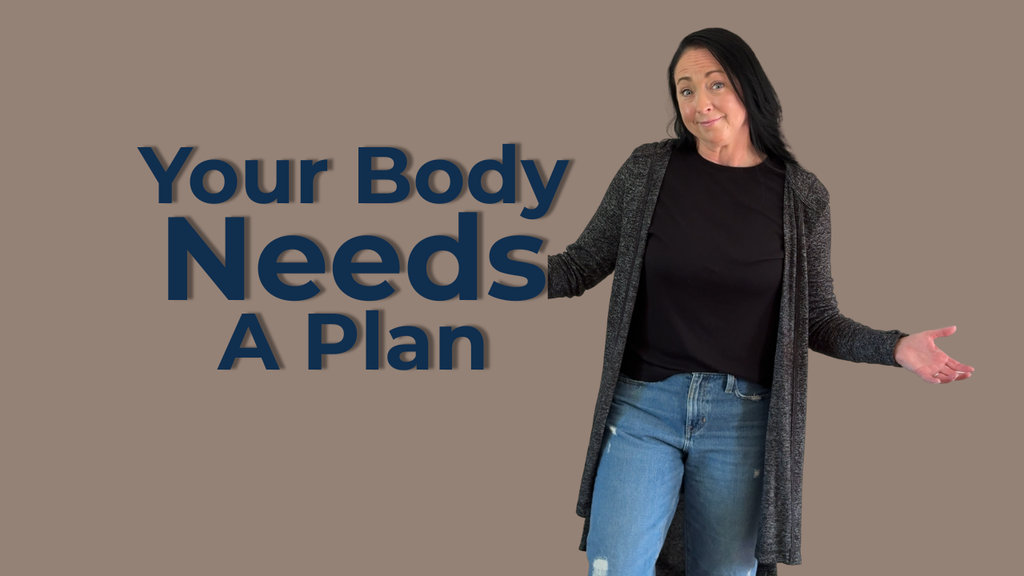
Your Body Needs a Retirement Plan
Heather Otterbine
September 14, 2026
We spend decades planning for the life we hope to have later.
We save money. We contribute to retirement accounts. We make choices today because we believe Future Us will benefit from them.
Maybe you’re saving for travel.
Maybe you’re dreaming about having more time to garden, hike, golf, kayak, work on your house, or spend with the people you love.
Maybe you don’t have a grand retirement vision at all.
Maybe you simply want the freedom to keep living your life on your own terms.
Whatever you’re saving for, there’s another question I think deserves our attention:
Are you investing in the body you’re going to need to live that life?
Because having the financial resources to do something and having the physical resources to do it are two very different things.
And I think we should be planning for both.
Your Physical Retirement Account
We understand the basic idea behind retirement investing.
You make deposits now so you’ll have resources available later.
Some of those deposits are easy.
Some aren’t.
Sometimes you’re putting away money you could happily spend today because you’ve decided having options later matters more.
Your physical capacity isn’t all that different.
The deposits might look like getting up a little earlier to move your body.
Protecting your sleep instead of staying up another hour.
Doing the strength work when the couch sounds considerably more appealing.
Taking the stairs when you could take the elevator.
Spending money on a class, equipment, or professional guidance.
Or simply deciding that you deserve a place on your own priority list.
None of those deposits has to be enormous.
But they do need to happen.
Because Future You isn’t only going to need money.
Future You is going to need options.
What Are You Actually Saving For?
Let’s say you’ve always dreamed about taking a big trip.
You’ve saved for it. You’ve planned it. You’ve finally got the time.
Fantastic.
But the trip itself might ask quite a bit from your body.
Can you carry your suitcase through the airport?
Walk around a city for several hours?
Navigate uneven sidewalks or cobblestones?
Climb the stairs to the little restaurant you stumbled across?
Get on and off trains?
Stand in line?
And still have enough energy left to actually enjoy yourself?
That’s physical capacity.
But maybe travel isn’t your thing.
Maybe you want to garden.
That can mean getting down toward the ground, reaching, pulling, carrying, changing positions—and getting yourself back up again.
Maybe you want to keep doing projects around your house.
That might require climbing a step stool, reaching overhead, carrying boxes, kneeling, pushing, pulling, balancing and reacting when something doesn’t go exactly as planned.
Maybe you want to hike.
Golf.
Kayak.
Play with your grandchildren.
Carry your own groceries.
Get something out of the bottom cabinet.
Reach for the bowl on the top shelf.
Or move a piece of furniture because you’ve suddenly decided at 7:30 in the morning that the entire living room needs rearranging.
Not that I know anyone who would do such a thing.
The point is this:
Your life has physical demands.
And the abilities that allow you to meet those demands are resources worth protecting.
Strength and Mobility Are Resources—But They’re Not the Only Ones
When we talk about exercise as we get older, the conversation often gets reduced to a handful of things we’re supposedly supposed to do.
Lift weights.
Walk.
Stretch.
Work on your balance.
Those things can certainly matter.
But I’m much more interested in the bigger question:
What does your life require from your body?
Because physical capacity isn’t one thing.
It’s your strength when you need to lift or carry something.
It’s your balance when the ground isn’t perfectly predictable.
It’s your mobility when you need to reach, bend, rotate, squat or change positions.
It’s your power when you need to produce force quickly.
It’s your endurance when the day lasts longer than twenty minutes.
It’s your coordination when several things need to happen at once.
And it’s your adaptability when life doesn’t present you with the perfectly controlled conditions of an exercise.
These aren’t simply fitness terms.
They’re resources.
And the more physical resources you have available, the more options you may have for meeting the demands of your life.
Maintain Before You Have to Reclaim
There’s a phrase I use constantly:
Maintain before you have to reclaim.
We have an interesting tendency to become very interested in an ability once we notice we’re losing it.
Suddenly getting off the floor matters.
Suddenly balance matters.
Suddenly stairs matter.
Suddenly carrying something heavy matters.
But what if we became interested sooner?
If you can get yourself off the floor now, give your body reasons to keep doing it.
If you can climb stairs, keep climbing stairs.
If you can carry things, keep carrying things.
If you have good balance, continue challenging it.
If you’re strong, keep asking your body to produce strength.
That doesn’t mean doing the exact same things forever. Our bodies change. Our circumstances change. What constitutes an appropriate challenge may change with them.
It means recognizing that the capacities you already have are valuable enough to maintain.
Instead of waiting for loss to make something important, we can ask:
What do I have now that I want Future Me to keep?
That question is the beginning of a physical retirement plan.
This Isn’t About Controlling Aging
There’s an important distinction here.
Taking care of yourself does not give you complete control over how you will age.
None of us gets that deal.
Illness happens.
Injuries happen.
Genetics matter.
Access matters.
Life circumstances matter.
Bodies change.
Aging is not a personal failure that can be prevented if you simply exercise hard enough, eat perfectly enough, or make all the “right” choices.
But acknowledging what we cannot control doesn’t require us to ignore what we may be able to influence.
There are things we can practice.
Things we can challenge.
Things we can support.
Things we can maintain.
And I think those things are worth investing in.
Not because getting older should frighten us.
But because having options matters.
Picture Your Life, Not a Fitness Test
When you picture yourself ten or twenty years from now, I don’t want you to start by imagining a number on a scale.
I don’t particularly care whether Future You can pass some arbitrary fitness test.
I want you to picture your life.
Where are you?
What are you doing?
Who are you with?
What do you enjoy?
What responsibilities do you still want to manage yourself?
What adventures do you hope you’re still saying yes to?
Then ask:
What will that life require from my body?
Now we have something meaningful to train for.
Not a generic definition of fitness.
Not someone else’s list of exercises everyone over a certain age is supposedly required to do.
Your life. Your demands. Your capacities.
That’s a very different way of thinking about exercise.
Make Deposits Toward the Life You Want
You don’t have to overhaul your entire life tomorrow.
Retirement accounts aren’t usually built with one enormous deposit…but wouldn’t that be AWESOME if they were!
They’re built over time.
Your physical retirement account works much the same way.
Keep moving.
Keep challenging yourself appropriately.
Build strength.
Use your mobility.
Challenge your balance.
Develop endurance.
Give your body opportunities to move quickly.
Keep learning new things.
Stay adaptable.
And perhaps most importantly, pay attention to why you’re doing them.
Because exercise isn’t the destination.
Your life is.
And if you’re wondering which capacities your life actually requires—or where you might want to start investing more intentionally—that’s exactly why I created The EveryDay Athlete Mini-Course.
Across five modules, we’ll look at the physical capacities behind everyday movement and help you start connecting them to what you want your body to continue doing.
Not so you can randomly collect more exercises.
So you can understand what you’re training for—and why.
Explore The EveryDay Athlete Mini-Course →
You already believe Future You is worth investing in financially.
I think your body deserves that same consideration.
Not because you should be afraid of getting older.
But because you’re planning on being there.
And I’d like you to have as many options as possible when you arrive.
Similar Posts
October 26, 2026
What Happens When Life Stops Challenging Your Body?
The hidden tradeoff of convenience—and why keeping your options open matters as you age. We’ve gotten remarkably good at making life easier. We invented cars so we wouldn’t have to...

October 22, 2026
Yoga Teachers: Stop Confusing Popularity With Skill
Yoga Teachers: Stop Confusing Popularity With Skill Why a full classroom isn’t proof of excellent teaching—and an empty mat isn’t proof of failure. Some of the best yoga teachers I’ve...
October 19, 2026
Why Was This Getting Harder? Maybe Discipline Wasn’t the Problem.
There was a time when I was teaching ten to eighteen yoga and Pilates classes every week. I was active. I exercised regularly. I ate well. I understood the importance...

October 15, 2026
Your Yoga Practice Is Not Your Teaching Qualification
What your personal practice demonstrates—and what it doesn’t tell us about your ability to teach. Yoga teachers, can we talk about something that’s been kinda bugging me for years? Why...
October 12, 2026
Feeling Fine Isn’t the Same as Being Prepared
“I’ll worry about it when I have to.” I’ve heard people say that about their health and physical abilities for years. And I understand it. When nothing hurts and you’re...

October 8, 2026
Yoga Teachers, You Need Better Questions.
What if becoming a more confident yoga teacher isn’t about having more answers, but learning to ask better questions? 🎥 Prefer to watch? Sometimes the most useful thing a yoga...

October 5, 2026
Your Life Might Be Getting Easier—And That’s Not Always Good News
Your life might be getting easier. And that sounds like a good thing, right? In a lot of ways, it absolutely is. We have groceries delivered to our doors. We...
October 1, 2026
Knowing Anatomy Isn’t Enough: What Makes a Better Yoga Teacher?
You can know a whole lot of anatomy and still not know what to do with the person standing in front of you. Imagine you’re teaching a yoga class and...

September 27, 2026
Life Changes the Assignment: Is Your Body Ready?
Why preparing your body for everyday life means building more physical capacity than you currently need. 🎬 Prefer to Watch? Sometimes it’s easier to see an idea come to life...

September 23, 2026
A Good Yoga Teacher Doesn’t Need to Have All the Answers
A Good Yoga Teacher Doesn’t Need to Have All the Answers Has a student ever said something like: “I feel something weird in my knee when I do this.” And...