
Why Was This Getting Harder? Maybe Discipline Wasn’t the Problem.
Heather Otterbine
October 19, 2026
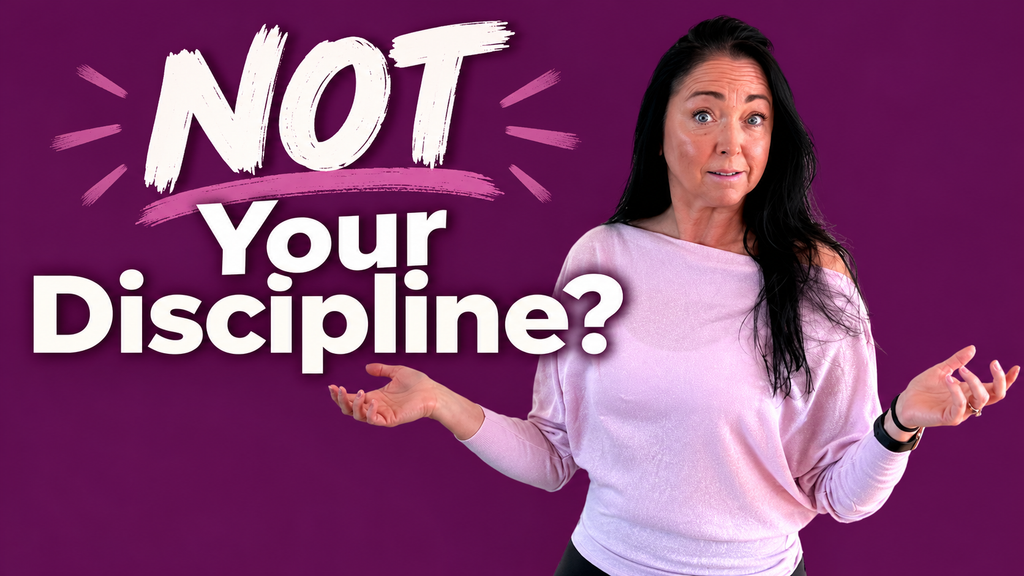
There was a time when I was teaching ten to eighteen yoga and Pilates classes every week.
I was active. I exercised regularly. I ate well. I understood the importance of taking care of my body.
And then menopause arrived.
My sleep changed. My joints ached. My body started responding differently to things I’d been doing for years.
And do you know what my first response was?
Apparently, I needed to try harder.
Exercise more. Eat less. Be more consistent. Be more disciplined.
Which, looking back, is a little ridiculous.
I was already putting in an enormous amount of effort.
But instead of questioning whether my approach was meeting my changing needs, I questioned myself.
When Everything Becomes a Performance Review
Have you ever noticed how quickly we turn physical changes into judgments about our behavior?
You feel more tired than you used to.
You notice that certain movements are becoming uncomfortable.
You don’t recover from activity quite the way you once did.
And suddenly you’re conducting an internal performance review.
I need to get myself together.
I need to be more consistent.
I need to work harder.
But what if effort isn’t actually the problem?
What if you haven’t stopped to identify what has changed?
Because there’s a significant difference between recognizing a change in your physical abilities and deciding that change means you’re doing something wrong.
The Moment at the Clothes Dryer
I remember squatting down to get clothes out of the dryer and realizing that getting back up wasn’t as easy as it should have been.
Now, here’s what makes that moment particularly interesting.
I was teaching yoga and Pilates for a living.
I was moving all day.
And yet, here was an ordinary household task that had become unexpectedly difficult.
My initial instinct could have been to add more exercise.
But more exercise wasn’t necessarily the answer.
The better question was:
What was this particular task asking my body to do, and where was I having difficulty meeting that demand?
Getting up from a squat requires a combination of joint mobility, strength, coordination, balance, and the ability to produce force from that position.
Being generally active doesn’t automatically mean you’re maintaining every physical capacity equally.
And that’s worth paying attention to.
Your Body Doesn’t Respond to Your Good Intentions
One of the things I talk about frequently is the difference between being active and being prepared.
You can exercise consistently and still discover gaps in your physical capacity.
You can be strong in one movement and struggle with another.
You can have years of experience with a particular activity and still find that changing circumstances require a different approach.
Our bodies adapt to the demands we place on them.
And those demands aren’t always the same as the demands of everyday life.
Think about what your day actually asks you to do.
Can you comfortably get down to the floor and back up?
Carry something heavy?
Reach overhead while maintaining your balance?
Walk farther than your usual daily distance?
Move from one position to another without needing to carefully plan every step?
These aren’t questions about whether you’re fit enough to earn a passing grade.
They’re questions about the physical abilities that help you participate in your life.
And the answers can give you useful information.
Change the Question Before You Change the Workout
When something starts feeling harder, it’s tempting to respond by doing more.
But before you add another workout, another rule, or another expectation, get specific.
What has actually changed?
Is it your ability to produce strength?
Your available range of motion?
Your endurance?
Your balance?
Your confidence performing a particular task?
Are you recovering differently? Sleeping poorly? Experiencing discomfort that deserves further attention?
Those are very different situations.
And they don’t all call for the same response.
Sometimes the answer might involve building strength. Sometimes it might involve practicing a movement in a different way, adjusting the demand, or addressing something beyond your exercise routine.
The point is to stop treating every change as evidence that you aren’t trying hard enough.
You need useful information, not another reason to criticize yourself.
Your Body Is Changing. Your Approach Can Change Too.
Menopause was part of my story, but this conversation is much bigger than menopause.
Our lives change.
Our responsibilities change.
Our activities change.
Our physical capacities change.
And sometimes we continue using an approach that made sense for an earlier version of our lives without considering whether it’s still serving us.
That doesn’t mean we need to start over every time something changes.
It means we need to pay attention.
To observe what we’re actually experiencing.
To understand the demands we’re trying to meet.
And to make decisions based on that information rather than frustration or self-judgment.
That’s how we begin building physical capacity that matters beyond the workout itself.
Start With What You Want to Be Able to Do
If you’re wondering where to begin, I’ve created a free interactive tool called the EveryDay Athlete Decoder.
It helps you explore your personal goals, circumstances, and the physical abilities that matter in your everyday life.
Rather than starting with another generic exercise prescription, it starts with you.
Explore the Free EveryDay Athlete Decoder → Click To Explore
And the next time you hear yourself thinking, I just need to try harder, I want you to ask something different.
What’s actually changed, and why have I decided the problem is my effort?
Because sometimes the most productive thing you can do isn’t to push harder.
It’s to ask a better question.
Question your approach before you question your discipline.
Prefer to watch? Watch the companion video, “Why Was This Getting Harder?” on YouTube.
WATCH THE VIDEO → Click Here
Similar Posts

October 26, 2026
What Happens When Life Stops Challenging Your Body?
The hidden tradeoff of convenience—and why keeping your options open matters as you age. We’ve gotten remarkably good at making life easier. We invented cars so we wouldn’t have to...

October 22, 2026
Yoga Teachers: Stop Confusing Popularity With Skill
Yoga Teachers: Stop Confusing Popularity With Skill Why a full classroom isn’t proof of excellent teaching—and an empty mat isn’t proof of failure. Some of the best yoga teachers I’ve...
October 19, 2026
Why Was This Getting Harder? Maybe Discipline Wasn’t the Problem.
There was a time when I was teaching ten to eighteen yoga and Pilates classes every week. I was active. I exercised regularly. I ate well. I understood the importance...

October 15, 2026
Your Yoga Practice Is Not Your Teaching Qualification
What your personal practice demonstrates—and what it doesn’t tell us about your ability to teach. Yoga teachers, can we talk about something that’s been kinda bugging me for years? Why...

October 12, 2026
Feeling Fine Isn’t the Same as Being Prepared
“I’ll worry about it when I have to.” I’ve heard people say that about their health and physical abilities for years. And I understand it. When nothing hurts and you’re...

October 8, 2026
Yoga Teachers, You Need Better Questions.
What if becoming a more confident yoga teacher isn’t about having more answers, but learning to ask better questions? 🎥 Prefer to watch? Sometimes the most useful thing a yoga...

October 5, 2026
Your Life Might Be Getting Easier—And That’s Not Always Good News
Your life might be getting easier. And that sounds like a good thing, right? In a lot of ways, it absolutely is. We have groceries delivered to our doors. We...
October 1, 2026
Knowing Anatomy Isn’t Enough: What Makes a Better Yoga Teacher?
You can know a whole lot of anatomy and still not know what to do with the person standing in front of you. Imagine you’re teaching a yoga class and...

September 27, 2026
Life Changes the Assignment: Is Your Body Ready?
Why preparing your body for everyday life means building more physical capacity than you currently need. 🎬 Prefer to Watch? Sometimes it’s easier to see an idea come to life...

September 23, 2026
A Good Yoga Teacher Doesn’t Need to Have All the Answers
A Good Yoga Teacher Doesn’t Need to Have All the Answers Has a student ever said something like: “I feel something weird in my knee when I do this.” And...