
What Happens When Life Stops Challenging Your Body?
Heather Otterbine
October 26, 2026

The hidden tradeoff of convenience—and why keeping your options open matters as you age.
We’ve gotten remarkably good at making life easier.
We invented cars so we wouldn’t have to walk everywhere.
Elevators so we wouldn’t have to climb the stairs.
Grocery pickup so we wouldn’t even have to walk through the store.
And now we can have dinner delivered without ever putting on pants.
Which, to be clear, is an achievement.
I’m not complaining.
Convenience is wonderful. It saves time, reduces unnecessary effort, improves accessibility, and gives us more freedom to choose how we spend our days.
But there’s something interesting about all this convenience that deserves a little attention.
We’ve made everyday life physically easier without necessarily considering what happens when our bodies stop being asked to do certain things.
Convenience Doesn’t Just Remove Effort. It Can Remove Practice.
Think about how many physical tasks used to be built into an ordinary day.
Walking to get somewhere. Carrying things. Climbing stairs. Getting down on the ground and back up again. Moving objects. Reaching, lifting, pushing, and pulling.
Not because someone had prescribed a functional fitness program.
Because life required it.
Today, many of those demands are optional.
And that’s not inherently a problem.
But here’s the distinction worth considering:
When life stops requiring a physical skill, we often stop practicing it.
And physical abilities don’t necessarily remain available simply because we might want to use them someday.
They need continued opportunities to be challenged.
That doesn’t mean every activity needs to be difficult. It doesn’t mean convenience is making us weak. And it certainly doesn’t mean we should abandon the things that make our lives easier.
It means we may need to become more intentional about the physical demands we choose to keep in our lives.
What Does Your Life No Longer Require You to Do?
Here’s a question I think is more interesting than asking whether you’re exercising enough:
What does your everyday life no longer require your body to do?
Does your day regularly require you to:
- Get yourself up from the floor?
- Carry something moderately heavy?
- Reach overhead while maintaining your balance?
- Walk for an extended period?
- Navigate uneven ground?
- Move quickly when something unexpected happens?
- Push, pull, squat, or change direction?
Maybe some of those things are part of your regular routine.
Maybe very few of them are.
Neither answer is a judgment.
It’s simply information.
And that information can help you think about what you might want to practice deliberately.
Because here’s something I want you to consider:
Life can stop requiring a physical skill long before you’re ready to lose it.
Just Because You Don’t Have To Doesn’t Mean You Won’t Want To
Maybe you don’t regularly sit on the floor anymore.
But you’d still like to be able to get down there and play with your grandchildren. Or your dog. Or retrieve something that rolled under the couch.
Maybe you rarely carry anything heavy.
But you’d like to lift your suitcase into the car without wondering whether you can manage it.
Maybe your everyday routine doesn’t require much walking.
But you still want to explore a new city on vacation, spend an afternoon wandering through a museum, or enjoy a long walk with someone you love.
The absence of a daily demand doesn’t make the ability irrelevant.
It simply means you may need to find other opportunities to maintain it.
And this is where I think our conversations about exercise and healthy aging could become much more meaningful.
Exercise Isn’t Just About Fitness. It’s About Options.
We spend a lot of time talking about the perfect workout.
The best exercises.
The ideal number of sets and repetitions.
How many minutes of cardio we should do.
And those conversations have value.
But they don’t always connect movement to the things that actually matter to us.
What if we started with a different question?
What do you want your body to continue allowing you to do?
Not just next week.
Five years from now.
Ten years from now.
What experiences do you want to remain available?
What activities bring meaning, pleasure, or independence to your life?
What would you hate to stop doing simply because your body was no longer prepared for it?
Those answers can give your movement practice a much more personal purpose.
Because the goal isn’t necessarily to become an athlete in the traditional sense.
It’s to maintain the physical capacity to participate in your own life.
You Don’t Have to Turn Your Entire Life Into a Workout
This isn’t an invitation to make every moment physically demanding.
Rest matters.
Convenience has value.
And nobody needs to feel guilty about having their groceries delivered.
But we can recognize that some physical demands are worth keeping—or deliberately adding back.
We can practice getting up and down from the floor.
We can carry things.
We can challenge our balance.
We can build strength, maintain mobility, and expose ourselves to different movement demands.
Not as punishment for the conveniences we enjoy.
Not because our bodies need to look a particular way.
But because we want to keep our options open.
And here’s the part I hope you’ll remember:
Your life may have been designed to require less and less of your body.
That doesn’t mean you have to settle for your body being capable of less.
Keep Your Options Open
Healthy aging isn’t just about what you can do today.
It’s also about preparing for the things you hope to keep doing tomorrow.
And while no movement program can guarantee what our bodies will be capable of in the future, continuing to challenge our physical abilities gives us a better opportunity to maintain them.
So instead of asking only whether you’re getting enough exercise, try asking:
What am I no longer practicing that I still want to be able to do?
That might be a much more useful place to begin.
Watch: What Happens When Life Stops Challenging Your Body?
In this week’s video, I explore how modern convenience has changed the physical demands of everyday life—and why intentional movement matters for keeping your options open.
Ready to Become an EveryDay Athlete?
My EveryDay Athlete Mini-Course helps you approach movement with a different purpose: developing the strength, mobility, balance, and physical capacity to support the life you want to keep living.
Because being an Everyday Athlete isn’t about competing with anyone.
It’s about being prepared for your own life.
Similar Posts
November 16, 2026
The Hidden Cost of Making Life Easier
What a dust bunny eviction taught me about healthy aging, physical capacity, and the freedom to make our own choices. This weekend, I found myself lying on my belly underneath...
November 11, 2026
The Students You’re Overlooking: Why Yoga Teachers Need to Pay Attention to an Aging Population
What if one of the greatest opportunities for yoga teachers isn’t a new style of yoga, a trendy class format, or another certification? What if it’s an entire population of...
November 8, 2026
Doing Less or Doing Different? Why Healthy Aging Requires More Than Giving Things Up
Sometimes maintaining the life you love means changing how you do things—not abandoning them. I absolutely love running on my treadmill. But I don’t run anymore. And that wasn’t an...
November 5, 2026
Yoga Class Sequencing: What Are You Actually Preparing Your Students For?
Thoughtful yoga class sequencing isn’t just about choosing poses that flow together. It’s about understanding what you’re asking students to practice—and why. You plan a yoga class. The transitions make...
November 2, 2026
Why “I Feel Fine” Is Lying to You After 50
“I feel fine.” It’s a reassuring thought—and a convincing reason to put something off. Nothing hurts. You can do what you need to do. Whatever you’re doing seems to be...
October 29, 2026
Build It and They Will Come Is NOT a Marketing Strategy
What more than 20 years of running a yoga business taught me about hard work, marketing, and professional integrity. I spent more than twenty years running a yoga business before...
October 26, 2026
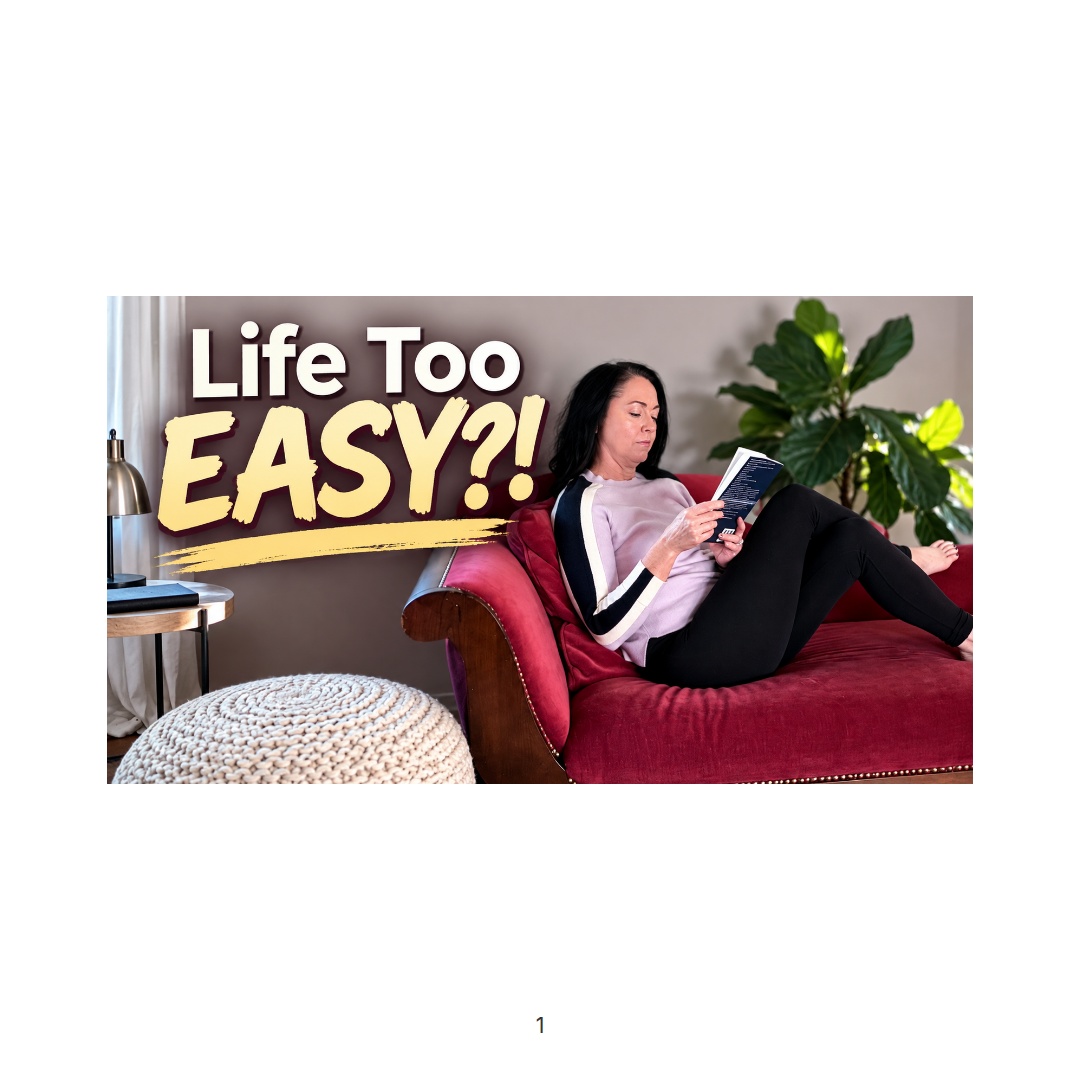
What Happens When Life Stops Challenging Your Body?
The hidden tradeoff of convenience—and why keeping your options open matters as you age. We’ve gotten remarkably good at making life easier. We invented cars so we wouldn’t have to...

October 22, 2026
Yoga Teachers: Stop Confusing Popularity With Skill
Yoga Teachers: Stop Confusing Popularity With Skill Why a full classroom isn’t proof of excellent teaching—and an empty mat isn’t proof of failure. Some of the best yoga teachers I’ve...
October 19, 2026
Why Was This Getting Harder? Maybe Discipline Wasn’t the Problem.
There was a time when I was teaching ten to eighteen yoga and Pilates classes every week. I was active. I exercised regularly. I ate well. I understood the importance...

October 15, 2026
Your Yoga Practice Is Not Your Teaching Qualification
What your personal practice demonstrates—and what it doesn’t tell us about your ability to teach. Yoga teachers, can we talk about something that’s been kinda bugging me for years? Why...