
Feeling Fine Isn’t the Same as Being Prepared
Heather Otterbine
October 12, 2026
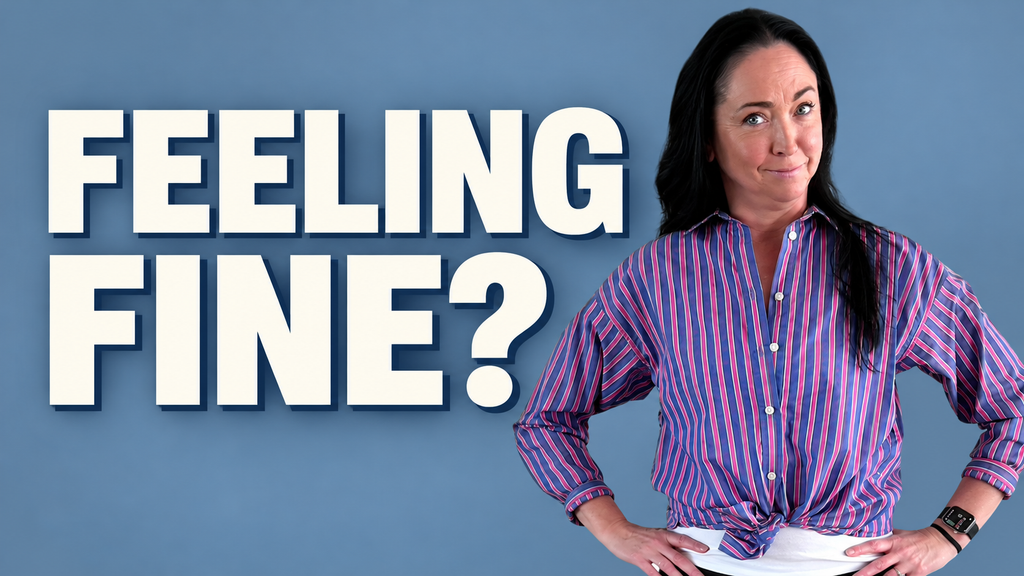
“I’ll worry about it when I have to.”
I’ve heard people say that about their health and physical abilities for years. And I understand it. When nothing hurts and you’re managing your everyday life, taking care of your physical capacity might not feel particularly urgent.
But here’s my question:
How will you know when you HAVE to?
When your knees start bothering you on the stairs? When getting up off the floor becomes a whole production? When an afternoon in the garden leaves you too tired to enjoy the rest of your day?
We often assume that because nothing is wrong, there’s nothing we need to be doing.
But feeling fine isn’t necessarily the same thing as being prepared.
Sometimes, We Don’t Know What We’re Working With
Prefer to watch? Join me on YouTube to watch Feeling Fine Isn’t the Same as Being Prepared as we explore the difference between prevention and maintenance—and what it means for the things you want to keep doing.
In more than 20 years of teaching movement, I’ve noticed that people often don’t recognize changes in their physical abilities until something makes those changes obvious.
Sometimes, that something is simply a little information.
During a research project I conducted involving grip strength and bone health, several women were surprised when we measured their grip strength. Their numbers were lower than they expected.
They hadn’t necessarily noticed a problem. Grip strength simply wasn’t something they’d been paying attention to.
Once we measured it, they had a starting point. I developed a wrist-strengthening protocol for them to practice, and some began showing small improvements within a week or two. By the end of the project, every participant had made marked improvements. Those who practiced consistently five to seven times a week generally improved more than those who practiced two or three times a week.
These women were surprised twice: first by where they were starting, and then by what they were able to improve.
Measuring their grip strength didn’t create their potential to improve. It brought their attention to an ability they hadn’t been deliberately working on.
Then they did something about it.
This was their experience in that project, rather than a promise about anyone else’s results. But it illustrates something valuable: an ability can deserve attention before we notice it becoming a problem.
Prevention and Maintenance Have Different Jobs
We hear a lot about prevention: preventing disease, preventing injuries, preventing the things we associate with getting older.
Prevention matters. But it isn’t a guarantee. You can take excellent care of yourself and still experience illness, injury, or changes you couldn’t have prevented.
Maintenance asks a slightly different question:
What am I doing to support the abilities I already have?
Your strength. Your balance. Your mobility. Your endurance. Your ability to handle the physical demands of your everyday life.
The trouble is that we tend to treat these abilities like permanent possessions. Because we can do something today, we assume we’ll still be able to do it next year—or ten years from now.
But your body doesn’t maintain physical capacity simply because you used to have it.
Think about what your life regularly asks you to do.
When was the last time you got down on the floor because your life required it? Carried something heavy? Climbed several flights of stairs? Walked for an extended period?
If those demands rarely show up, you may need to create opportunities to practice the abilities you want to keep.
What your life requires of your body today may not be enough to prepare you for what you want to do tomorrow.
What Do You Want to Keep?
I’m 55. I’m not particularly interested in trying to prevent every possible change that might happen to my body over the next 30 years.
First of all, that’s impossible. Second, I have better things to do with my time!
But I AM interested in maintaining the abilities that allow me to live the life I want.
I want to travel. Spend hours working in my yard and still enjoy the rest of my day. Carry my own stuff. Get down on the floor and know I can get myself back up.
And when life suddenly asks more of me than usual, I want some physical capacity in reserve.
That’s what I’m maintaining: the body I have now, for the life I still want to live.
Not every change that comes with aging is preventable. But that doesn’t mean every loss of physical ability is inevitable, either.
We can’t control everything that happens to our bodies. We can influence some of it. And that’s a pretty good reason to pay attention.
Start With Something in Your Actual Life
Think of one thing you can do today that you want to still be doing ten years from now.
Something you enjoy or value. Gardening. Hiking. Exploring new places. Getting down on the floor with your grandchildren. Managing your home and taking care of yourself.
Now ask:
What does my body need to be capable of doing to make that possible?
Take gardening. It can involve bending, squatting, kneeling, lifting, carrying, reaching, and spending time in different positions. Keeping gardening available to you means supporting the strength, mobility, balance, and endurance it asks of your body.
That leads to the next question:
Am I giving my body regular opportunities to maintain those abilities?
If the answer is no, you’ve found a place to begin.
You might practice getting down to the floor and back up with appropriate support. Build strength for lifting and carrying. Gradually increase your walking endurance. Give your balance some attention.
You don’t have to do everything at once.
Choose one ability that matters to you and begin giving it regular, manageable attention.
And If Something Is Already Difficult?
You haven’t necessarily missed your opportunity.
The women in my research project started in different places and progressed at different rates. Every participant improved, but that doesn’t mean every limitation can be reversed or everyone will respond the same way.
It means your starting point isn’t automatically your finishing point.
You can work with the body you have and explore what progress is possible from here.
You don’t have to wait until something goes wrong to start doing something right.
Maintain Before You Have to Reclaim
Your body deserves attention before a diagnosis, a crisis, or the moment something you love becomes difficult.
That doesn’t require spending your life worrying about what might happen. It requires recognizing that the physical abilities you value deserve support along the way.
Maintain before you have to reclaim.
And if you’re already working to reclaim something, start there. Recognize where you are and what you can do next.
That’s what being an EveryDay Athlete is all about: understanding the demands your everyday life makes on your body and building the capacity to meet them.
Because your sport is your life. And that’s worth training for.
Discover What Your Life Asks of Your Body
If you’re wondering which physical abilities matter to the things you want to keep doing, try my FREE EveryDay Athlete Decoder.
You tell it an activity you love, and it helps you identify the physical capacities involved. It’s a starting point for understanding what might deserve more of your attention.
Start with your life. Get curious about what it asks of your body.
And remember: Maintain before you have to reclaim.
Similar Posts

November 16, 2026
The Hidden Cost of Making Life Easier
What a dust bunny eviction taught me about healthy aging, physical capacity, and the freedom to make our own choices. This weekend, I found myself lying on my belly underneath...

November 11, 2026
The Students You’re Overlooking: Why Yoga Teachers Need to Pay Attention to an Aging Population
What if one of the greatest opportunities for yoga teachers isn’t a new style of yoga, a trendy class format, or another certification? What if it’s an entire population of...

November 8, 2026
Doing Less or Doing Different? Why Healthy Aging Requires More Than Giving Things Up
Sometimes maintaining the life you love means changing how you do things—not abandoning them. I absolutely love running on my treadmill. But I don’t run anymore. And that wasn’t an...
November 5, 2026
Yoga Class Sequencing: What Are You Actually Preparing Your Students For?
Thoughtful yoga class sequencing isn’t just about choosing poses that flow together. It’s about understanding what you’re asking students to practice—and why. You plan a yoga class. The transitions make...
November 2, 2026
Why “I Feel Fine” Is Lying to You After 50
“I feel fine.” It’s a reassuring thought—and a convincing reason to put something off. Nothing hurts. You can do what you need to do. Whatever you’re doing seems to be...

October 29, 2026
Build It and They Will Come Is NOT a Marketing Strategy
What more than 20 years of running a yoga business taught me about hard work, marketing, and professional integrity. I spent more than twenty years running a yoga business before...

October 26, 2026
What Happens When Life Stops Challenging Your Body?
The hidden tradeoff of convenience—and why keeping your options open matters as you age. We’ve gotten remarkably good at making life easier. We invented cars so we wouldn’t have to...

October 22, 2026
Yoga Teachers: Stop Confusing Popularity With Skill
Yoga Teachers: Stop Confusing Popularity With Skill Why a full classroom isn’t proof of excellent teaching—and an empty mat isn’t proof of failure. Some of the best yoga teachers I’ve...
October 19, 2026
Why Was This Getting Harder? Maybe Discipline Wasn’t the Problem.
There was a time when I was teaching ten to eighteen yoga and Pilates classes every week. I was active. I exercised regularly. I ate well. I understood the importance...

October 15, 2026
Your Yoga Practice Is Not Your Teaching Qualification
What your personal practice demonstrates—and what it doesn’t tell us about your ability to teach. Yoga teachers, can we talk about something that’s been kinda bugging me for years? Why...