Your Low Back Isn’t the Problem: 3 Things Your Body Is Trying to Tell You
Heather Otterbine
May 18, 2026
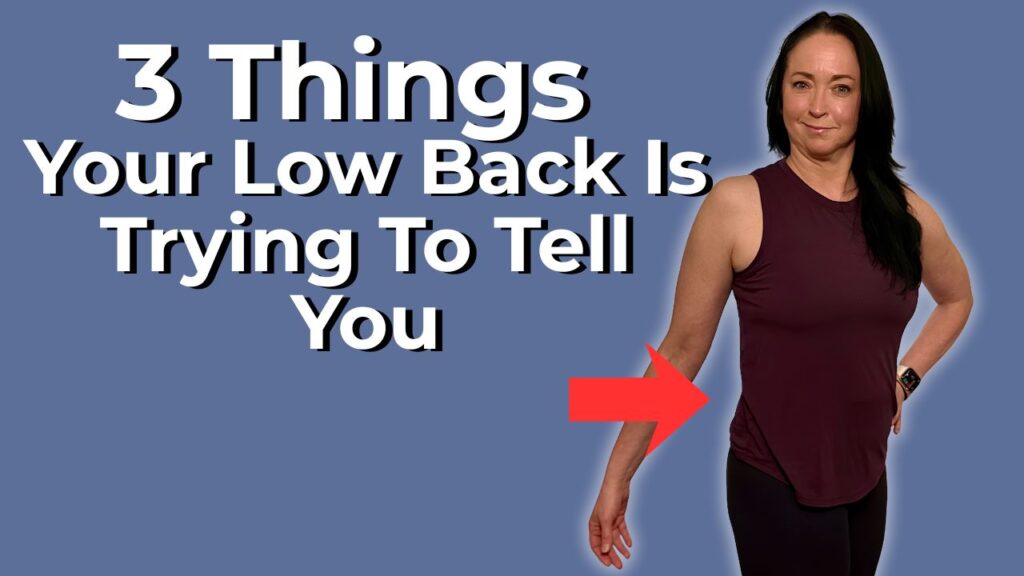
Low back pain has become one of the most normalized problems in modern life.
People expect stiffness when they wake up.
They expect aching after sitting.
They expect their back to “go out.”
They expect movement to hurt eventually.
And because it’s so common, most people immediately try to treat the low back itself.
They stretch it.
Twist it.
Brace it.
Massage it.
Crack it.
Baby it.
But here’s the thing I wish more people understood:
Your low back is often the messenger, not the root problem.
From a functional movement perspective, the low back is frequently compensating for something else:
- poor balance and adaptability
- limited hip movement
- weak timing and coordination through the core
- stiffness higher or lower in the chain
- lack of movement variability
- instability that the body is trying desperately to control
Your body is smart.
It will always find a way to keep you moving.
Even if that means your low back does extra work it was never designed to do.
That’s exactly why I created this recent 3-part YouTube series:
- “Try THIS Instead of Bracing Your Core!”
- “Stop Twisting From Your Low Back!”
- “What Balance Has To Do With Your Low Back”
Because if we only focus on the site of pain, we miss the bigger story.
Stop “Bracing” Everything
One of the biggest misconceptions in fitness and rehab culture is that the core should always be rigid and tight.
People are constantly told:
“Brace your core.”
“Tighten your abs.”
“Pull your belly button in.”
Now listen…
There are moments where bracing is useful.
But your body was not designed to live there all day.
Real human movement requires:
- timing
- responsiveness
- pressure management
- adaptability
- coordination
Your core is not just your abs.
It’s an entire pressure and stabilization system involving:
- the diaphragm
- pelvic floor
- deep abdominal muscles
- spinal stabilizers
- breath mechanics
- hips
- rib cage
The goal is not permanent tension.
The goal is the ability to respond appropriately to movement demands.
When people over-brace constantly, they often:
- stop breathing well
- create unnecessary rigidity
- reduce movement adaptability
- increase tension through the spine
- lose natural rotational mechanics
- create fatigue and compression patterns
Ironically, many people trying to “protect” their backs are actually making their backs work harder.
Your body needs stability, yes.
But it also needs movement.
Functional movement lives in the relationship between the two.
Your Low Back Was Never Designed to Be Your Main Rotator
Another huge issue I see constantly:
People twisting aggressively through their lumbar spine.
The low back has some rotational ability…
but not very much.
The thoracic spine (mid-back) and hips are designed to contribute far more to rotational movement.
But when those areas become stiff or underused, the body steals motion from wherever it can get it.
Usually?
The low back pays the price.
This shows up everywhere:
- golf
- pickleball
- tennis
- yoga
- getting out of the car
- reaching awkwardly
- gardening
- everyday turning movements
People often think:
“My back hurts when I twist.”
But the real question is:
Why is your low back doing so much of the twisting in the first place?
When the hips don’t rotate well…
when the thoracic spine gets stiff…
when balance and coordination decline…
the lumbar spine becomes the overachiever.
And overachievers eventually get irritated.
This is why functional movement matters so much.
We’re not just stretching muscles randomly.
We’re improving how the body shares load and movement across the entire system.
Balance Is About Far More Than Falling
When most people hear the word “balance,” they think:
“Don’t fall.”
But balance is actually one of the most foundational components of healthy movement.
Balance is your body’s ability to:
- organize itself in space
- react to change
- coordinate muscles efficiently
- shift weight appropriately
- stabilize dynamically
- recover from perturbation
And guess what happens when balance declines?
The body starts gripping.
It stiffens.
Co-contracts.
Moves cautiously.
Reduces variability.
This often creates the exact stiffness patterns people associate with aging.
But many times, it’s not simply “getting older.”
It’s loss of adaptability.
Your nervous system wants safety.
If balance, coordination, or proprioception decline, the body often creates extra tension to compensate.
That compensation frequently lands in the low back.
This is one reason I care so deeply about functional movement training.
Not just isolated exercises.
Not just aesthetics.
Not just “working out.”
But teaching the body how to:
- adapt
- coordinate
- react
- stabilize dynamically
- move confidently through life
That’s real-world movement.
The Goal Isn’t Perfection. It’s Capacity.
One of the biggest shifts I want people to make is moving away from fear-based movement thinking.
Your body is not fragile.
It’s adaptable.
Trainable.
Responsive.
The answer is not avoiding movement.
The answer is improving your movement capacity.
That means:
- improving balance
- improving coordination
- improving rotational control
- improving strength
- improving timing
- improving adaptability
- improving confidence
Not becoming rigid.
Not locking everything down.
Not moving like a robot.
Healthy movement is responsive movement.
And honestly?
This is one of the biggest missing conversations in modern fitness and wellness spaces.
We’ve become obsessed with isolated muscles while ignoring integrated human movement.
But life is integrated.
Your body is always communicating across systems.
The low back is rarely acting alone.
Final Thoughts
If your low back is always tight…
always stiff…
always talking to you…
there’s a good chance your body is asking for something bigger than another stretch.
Maybe it needs:
- better balance
- better rotational mechanics
- better breathing
- better pressure management
- better movement variability
- better coordination
- better strength
- better adaptability
That’s the lens I teach through.
Not punishment.
Not fear.
Not “perfect posture.”
Not rigid movement rules.
But helping people become more capable, resilient, and adaptable humans.
Because healthy aging is not about becoming smaller and more cautious.
It’s about maintaining the ability to fully participate in your life.
And that starts with how you move.
Similar Posts
October 26, 2026
What Happens When Life Stops Challenging Your Body?
The hidden tradeoff of convenience—and why keeping your options open matters as you age. We’ve gotten remarkably good at making life easier. We invented cars so we wouldn’t have to...

October 22, 2026
Yoga Teachers: Stop Confusing Popularity With Skill
Yoga Teachers: Stop Confusing Popularity With Skill Why a full classroom isn’t proof of excellent teaching—and an empty mat isn’t proof of failure. Some of the best yoga teachers I’ve...

October 19, 2026
Why Was This Getting Harder? Maybe Discipline Wasn’t the Problem.
There was a time when I was teaching ten to eighteen yoga and Pilates classes every week. I was active. I exercised regularly. I ate well. I understood the importance...

October 15, 2026
Your Yoga Practice Is Not Your Teaching Qualification
What your personal practice demonstrates—and what it doesn’t tell us about your ability to teach. Yoga teachers, can we talk about something that’s been kinda bugging me for years? Why...

October 12, 2026
Feeling Fine Isn’t the Same as Being Prepared
“I’ll worry about it when I have to.” I’ve heard people say that about their health and physical abilities for years. And I understand it. When nothing hurts and you’re...

October 8, 2026
Yoga Teachers, You Need Better Questions.
What if becoming a more confident yoga teacher isn’t about having more answers, but learning to ask better questions? 🎥 Prefer to watch? Sometimes the most useful thing a yoga...

October 5, 2026
Your Life Might Be Getting Easier—And That’s Not Always Good News
Your life might be getting easier. And that sounds like a good thing, right? In a lot of ways, it absolutely is. We have groceries delivered to our doors. We...

October 1, 2026
Knowing Anatomy Isn’t Enough: What Makes a Better Yoga Teacher?
You can know a whole lot of anatomy and still not know what to do with the person standing in front of you. Imagine you’re teaching a yoga class and...

September 27, 2026
Life Changes the Assignment: Is Your Body Ready?
Why preparing your body for everyday life means building more physical capacity than you currently need. 🎬 Prefer to Watch? Sometimes it’s easier to see an idea come to life...

September 23, 2026
A Good Yoga Teacher Doesn’t Need to Have All the Answers
A Good Yoga Teacher Doesn’t Need to Have All the Answers Has a student ever said something like: “I feel something weird in my knee when I do this.” And...