
Tight Hips? It’s Not What You Think (And Stretching Isn’t the Fix)
Heather Otterbine
March 23, 2026
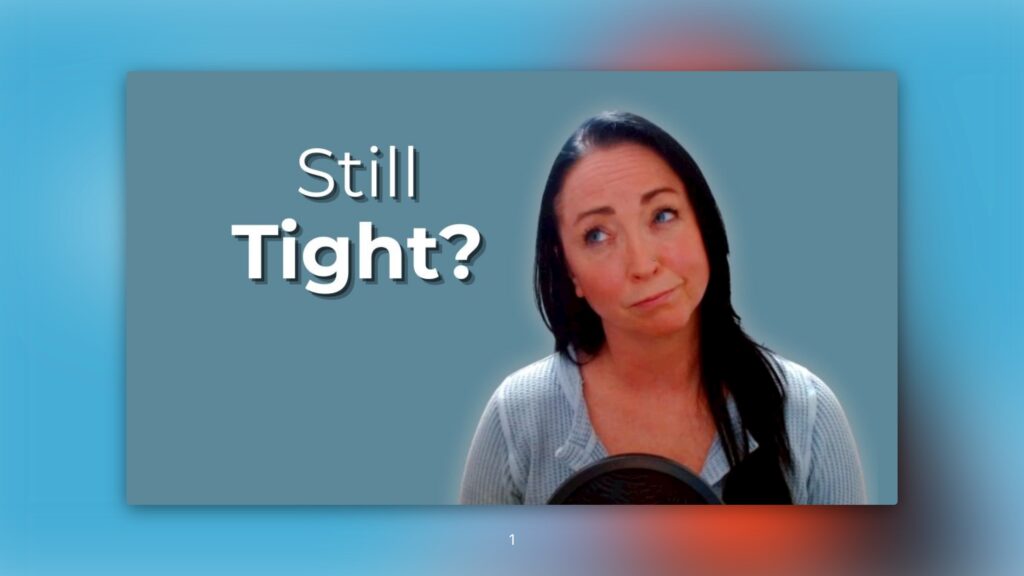
If you’ve ever been told you have “tight hips,” you’re not alone.
It’s one of the most common complaints I hear—from yoga students, fitness clients, and especially adults over 40.
And the usual solution?
Stretch more.
Do more hip openers.
Hold pigeon pose longer.
But here’s the truth most people aren’t hearing:
Tight doesn’t always mean short.
And stretching isn’t always the answer.
What “Tight Hips” Actually Mean
That feeling of tightness in your hips?
It’s not always because your muscles need to be lengthened.
Often, it’s because your body is creating tension as a form of protection.
Your nervous system is incredibly smart.
If your hips don’t feel strong, stable, or well-controlled, your body may increase muscle tone to create a sense of safety.
So what you’re feeling as “tight” might actually be:
- A lack of strength
- Limited control through range of motion
- Poor coordination between muscle groups
- Or even joint restrictions—not muscle restrictions
In other words: your body is asking for support, not just stretch.
Why Stretching Alone Doesn’t Fix It
Stretching feels good. I’m not anti-stretching.
But if stretching is the only thing you’re doing, you might be missing the bigger picture.
When you repeatedly stretch a muscle that already lacks stability:
- You don’t improve control
- You don’t build strength
- And you may actually increase irritation or discomfort
This is why so many people say:
“I stretch my hips all the time… but they still feel tight.”
Because the root issue hasn’t been addressed.
The Pigeon Pose Problem
Let’s talk about one of the most common hip stretches: pigeon pose.
In yoga spaces, you’ll often hear that a parallel shin is the “goal.”
But for many bodies, that simply isn’t realistic—or appropriate.
Hip anatomy varies significantly from person to person.
Not everyone has a hip joint that allows for that degree of external rotation.
So what happens when someone forces it?
👉The motion doesn’t come from the hip
👉 It shifts into the knee
👉 And the knee is not designed for rotation
This is one of the most common ways people irritate their knees in yoga.
More depth is not always better. Better control is better.
What Your Hips Might ACTUALLY Need
Instead of only stretching your hips, your body benefits from a more balanced approach:
1. Strength
Your hips need to be strong enough to support your body in everyday movements—like walking, climbing stairs, and standing up from a chair.
2. Control
Can you move your hip through a range of motion with control, not just passive flexibility?
3. Stability
Your body needs to feel safe in the joint.
This is what allows your nervous system to reduce unnecessary tension.
4. Mobility (Not Just Flexibility)
Mobility is strength + control through range.
That’s what creates lasting change.
A Better Approach
Instead of forcing deeper stretches, try this:
- Add active hip work (not just passive stretching)
- Use smaller, controlled ranges of motion
- Focus on how the movement feels, not how it looks
- Back off positions that create knee discomfort
- Build strength in supporting muscles (glutes, deep hip rotators, core)
You don’t need to give up stretching.
You just need to balance it with strength and control.
Final Thoughts
If your hips feel tight, it’s not a problem to force your way through.
It’s a message.
Your body isn’t asking you to push harder.
It’s asking for a different kind of support.
When you shift from chasing flexibility to building strength and mobility, everything changes:
- Movement feels smoother
- Discomfort decreases
- And your body becomes more capable and resilient over time
▶️ Want to Go Deeper?
If you haven’t seen the full video series yet, start here:
👉 The #1 Exercise Adults Over 50 Should Be Doing
Similar Posts

October 26, 2026
What Happens When Life Stops Challenging Your Body?
The hidden tradeoff of convenience—and why keeping your options open matters as you age. We’ve gotten remarkably good at making life easier. We invented cars so we wouldn’t have to...

October 22, 2026
Yoga Teachers: Stop Confusing Popularity With Skill
Yoga Teachers: Stop Confusing Popularity With Skill Why a full classroom isn’t proof of excellent teaching—and an empty mat isn’t proof of failure. Some of the best yoga teachers I’ve...

October 19, 2026
Why Was This Getting Harder? Maybe Discipline Wasn’t the Problem.
There was a time when I was teaching ten to eighteen yoga and Pilates classes every week. I was active. I exercised regularly. I ate well. I understood the importance...

October 15, 2026
Your Yoga Practice Is Not Your Teaching Qualification
What your personal practice demonstrates—and what it doesn’t tell us about your ability to teach. Yoga teachers, can we talk about something that’s been kinda bugging me for years? Why...

October 12, 2026
Feeling Fine Isn’t the Same as Being Prepared
“I’ll worry about it when I have to.” I’ve heard people say that about their health and physical abilities for years. And I understand it. When nothing hurts and you’re...

October 8, 2026
Yoga Teachers, You Need Better Questions.
What if becoming a more confident yoga teacher isn’t about having more answers, but learning to ask better questions? 🎥 Prefer to watch? Sometimes the most useful thing a yoga...

October 5, 2026
Your Life Might Be Getting Easier—And That’s Not Always Good News
Your life might be getting easier. And that sounds like a good thing, right? In a lot of ways, it absolutely is. We have groceries delivered to our doors. We...
October 1, 2026
Knowing Anatomy Isn’t Enough: What Makes a Better Yoga Teacher?
You can know a whole lot of anatomy and still not know what to do with the person standing in front of you. Imagine you’re teaching a yoga class and...

September 27, 2026
Life Changes the Assignment: Is Your Body Ready?
Why preparing your body for everyday life means building more physical capacity than you currently need. 🎬 Prefer to Watch? Sometimes it’s easier to see an idea come to life...
September 23, 2026
A Good Yoga Teacher Doesn’t Need to Have All the Answers
A Good Yoga Teacher Doesn’t Need to Have All the Answers Has a student ever said something like: “I feel something weird in my knee when I do this.” And...