The Students You’re Overlooking: Why Yoga Teachers Need to Pay Attention to an Aging Population
Heather Otterbine
November 11, 2026
What if one of the greatest opportunities for yoga teachers isn’t a new style of yoga, a trendy class format, or another certification?
What if it’s an entire population of people who aren’t seeing themselves reflected in the yoga classes being offered?
We’re living through a significant demographic shift. The population is aging, and the implications extend far beyond healthcare and retirement planning.
They extend right into our yoga asana rooms.
Sometimes called the Silver Tsunami, this demographic shift represents something yoga teachers would be wise to pay attention to.
Not because older adults are a marketing opportunity to exploit. Because they’re people with goals, interests, challenges, and decades of life experience who deserve thoughtful, effective movement education. And many of them aren’t finding what they’re looking for in traditional yoga classes.
The Problem Isn’t That Older Adults Don’t Want to Move
Consider what many people want from movement as they get older.
They want to continue traveling, gardening, hiking, playing with grandchildren, getting up and down from the floor, and participating in the activities that make their lives meaningful.
They want to maintain independence.
They want to feel capable in their bodies.
They want to keep doing the things they love.
Now consider how yoga is often presented.
Images of impressive poses. Complicated transitions. Extreme flexibility. Classes marketed around physical intensity or achieving increasingly challenging shapes.
There’s nothing inherently wrong with challenging yoga practices.
But when those images dominate the conversation, we may unintentionally communicate that yoga is designed for a particular kind of body or a particular kind of physical ability.
And people who don’t see themselves represented may decide yoga simply isn’t for them.
That’s not necessarily a lack of interest in yoga. It may be a disconnect between what we’re offering and what people actually need.
An Aging Population Is Not a Homogeneous Population
One of the biggest mistakes we can make is assuming that everyone over a certain age needs the same kind of practice.
Some older adults are experienced athletes.
Some are managing chronic conditions.
Some are returning to movement after years of inactivity.
Some have practiced yoga for decades.
Others are walking into their first class.
Age alone tells us very little about an individual’s physical capacity, movement experience, goals, or preferences.
A 70-year-old who regularly hikes challenging terrain may have very different needs from a 55-year-old who spends most of the day sitting.
And two people of the same age may have completely different movement histories.
This is where thoughtful teaching becomes so important.
Instead of asking, “What poses should I teach older adults?” perhaps we should begin with a different question:
“Who is standing in front of me, and what does this person need from their movement practice?”
That question changes everything.
Teaching Older Adults Requires More Than Easier Poses
There’s a common misconception that making yoga accessible simply means making the poses easier.
But a modification isn’t automatically easier.
And an easier-looking pose isn’t necessarily more appropriate.
A chair can provide valuable support for one student while creating an entirely different challenge for another.
Reducing range of motion may be helpful in one situation and unnecessary in another.
The important question isn’t whether a pose looks easier.
It’s whether the movement serves the person performing it.
That requires us to observe, ask questions, understand movement demands, and make informed decisions.
It also requires us to recognize when something falls outside our professional scope.
Good teaching isn’t about having a modification for every pose. It’s about understanding why, when, and for whom a modification might be useful.
Your Students’ Goals May Be Different From Yours
As yoga teachers, it’s easy to become deeply invested in the practice itself.
We study alignment, sequencing, anatomy, philosophy, and movement techniques. We develop personal practices and refine our teaching skills.
But our students aren’t necessarily interested in the same things we are.
A student may have no desire to achieve a challenging arm balance. They may, however, be very interested in maintaining the strength and coordination required to get off the floor.
They may not care about increasing their forward-fold range of motion. But they might care about being able to comfortably put on their shoes, work in the garden, or pick something up.
Neither set of goals is inherently more valuable.
Our responsibility is to understand what matters to the individual and help them work toward it.
Teach people, not poses.
It’s a simple philosophy, but it has profound implications for how we design and deliver our classes.
This Is Also an Opportunity for Yoga Teachers
Let’s talk about the business side for a moment.
There is nothing wrong with wanting a sustainable teaching career.
In fact, sustainability matters if we want experienced, knowledgeable teachers to continue serving their communities.
An aging population creates an opportunity for yoga teachers who are willing to understand the needs of people who may not currently feel welcome or represented in conventional yoga spaces.
But that doesn’t mean slapping the words Senior Yoga onto an existing class and calling it a day.
It means reconsidering how we communicate, what we teach, and how we prepare ourselves to teach effectively.
Are your class descriptions focused entirely on poses and styles?
Or do they communicate how the practice might support the activities your potential students value?
Does your marketing represent a variety of ages, abilities, and experiences?
Are you prepared to work with students whose movement needs differ from your own?
Can you adapt your teaching without assuming that everyone in a particular age group needs the same approach?
These are questions worth asking.
And the answers may reveal opportunities you haven’t considered.
The Future of Yoga Teaching Requires Better Questions
I spent many years training yoga teachers, and one principle has remained central to my approach:
A good education should teach you to ask better questions, not simply memorize more answers.
We cannot possibly anticipate every individual who will walk into our classrooms.
And no training program can give us a universal solution for every body, condition, goal, or movement challenge.
What we can develop is the ability to observe more carefully, think more critically, adapt more thoughtfully, and recognize the limits of our knowledge.
Those skills become increasingly important when we’re working with a diverse population.
And an aging population is diverse.
The opportunity isn’t simply to teach more older adults.
It’s to become the kind of teacher who can serve them well.
Are You Overlooking the Students Who Need You?
The demographic landscape is changing.
And yoga teachers have a choice.
We can continue designing classes primarily around the practices we enjoy teaching.
Or we can become more curious about the people in our communities and the movement experiences that would genuinely support their lives.
This doesn’t mean abandoning traditional yoga practices or changing everything about how you teach.
It means broadening your perspective.
It means recognizing that the most valuable thing you offer may not be an impressive sequence or a challenging pose.
It may be your ability to help someone feel more capable, confident, and connected to their body.
And that is a pretty extraordinary thing to offer.
Want to Become a More Thoughtful, Effective Yoga Teacher?
Body Literacy for Yoga Teachers is now open for enrollment.
This continuing education experience is designed to help yoga teachers develop the professional reasoning skills that support more individualized, responsive teaching.
You’ll explore observation, movement considerations, thoughtful adaptations, reassessment, and professional scope so you can make more informed decisions for the people in front of you.
Because effective teaching isn’t about knowing every answer….It’s about learning to ask better questions.
Explore Body Literacy for Yoga Teachers
Prefer to Watch?
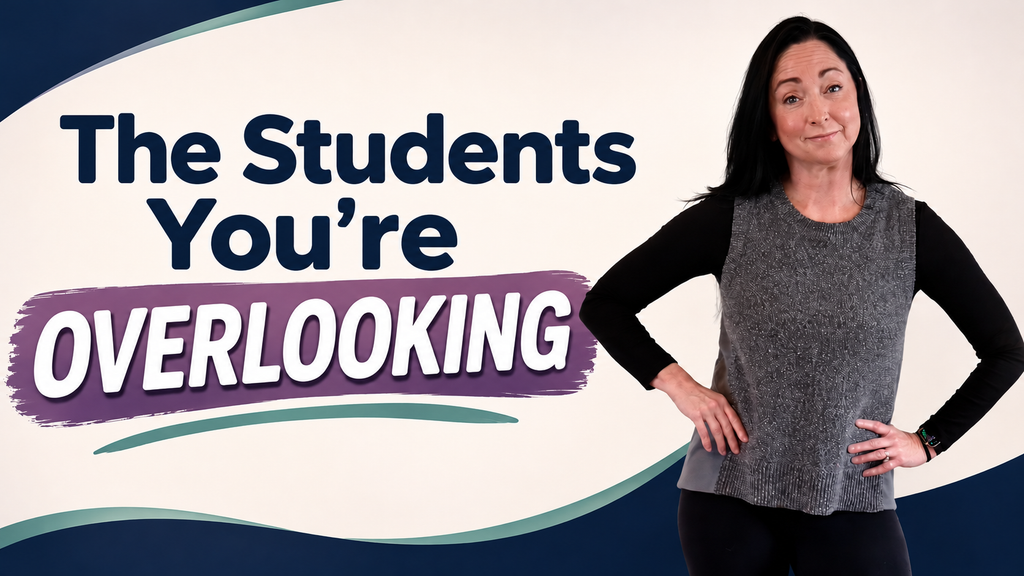
Watch this week’s YouTube video, The Students You’re Overlooking, for more on why the aging population deserves the attention of yoga teachers.
Similar Posts

November 16, 2026
The Hidden Cost of Making Life Easier
What a dust bunny eviction taught me about healthy aging, physical capacity, and the freedom to make our own choices. This weekend, I found myself lying on my belly underneath...
November 11, 2026
The Students You’re Overlooking: Why Yoga Teachers Need to Pay Attention to an Aging Population
What if one of the greatest opportunities for yoga teachers isn’t a new style of yoga, a trendy class format, or another certification? What if it’s an entire population of...
November 8, 2026
Doing Less or Doing Different? Why Healthy Aging Requires More Than Giving Things Up
Sometimes maintaining the life you love means changing how you do things—not abandoning them. I absolutely love running on my treadmill. But I don’t run anymore. And that wasn’t an...

November 5, 2026
Yoga Class Sequencing: What Are You Actually Preparing Your Students For?
Thoughtful yoga class sequencing isn’t just about choosing poses that flow together. It’s about understanding what you’re asking students to practice—and why. You plan a yoga class. The transitions make...
November 2, 2026
Why “I Feel Fine” Is Lying to You After 50
“I feel fine.” It’s a reassuring thought—and a convincing reason to put something off. Nothing hurts. You can do what you need to do. Whatever you’re doing seems to be...

October 29, 2026
Build It and They Will Come Is NOT a Marketing Strategy
What more than 20 years of running a yoga business taught me about hard work, marketing, and professional integrity. I spent more than twenty years running a yoga business before...

October 26, 2026
What Happens When Life Stops Challenging Your Body?
The hidden tradeoff of convenience—and why keeping your options open matters as you age. We’ve gotten remarkably good at making life easier. We invented cars so we wouldn’t have to...

October 22, 2026
Yoga Teachers: Stop Confusing Popularity With Skill
Yoga Teachers: Stop Confusing Popularity With Skill Why a full classroom isn’t proof of excellent teaching—and an empty mat isn’t proof of failure. Some of the best yoga teachers I’ve...
October 19, 2026
Why Was This Getting Harder? Maybe Discipline Wasn’t the Problem.
There was a time when I was teaching ten to eighteen yoga and Pilates classes every week. I was active. I exercised regularly. I ate well. I understood the importance...

October 15, 2026
Your Yoga Practice Is Not Your Teaching Qualification
What your personal practice demonstrates—and what it doesn’t tell us about your ability to teach. Yoga teachers, can we talk about something that’s been kinda bugging me for years? Why...