
Why “I Feel Fine” Is Lying to You After 50
Heather Otterbine
November 2, 2026
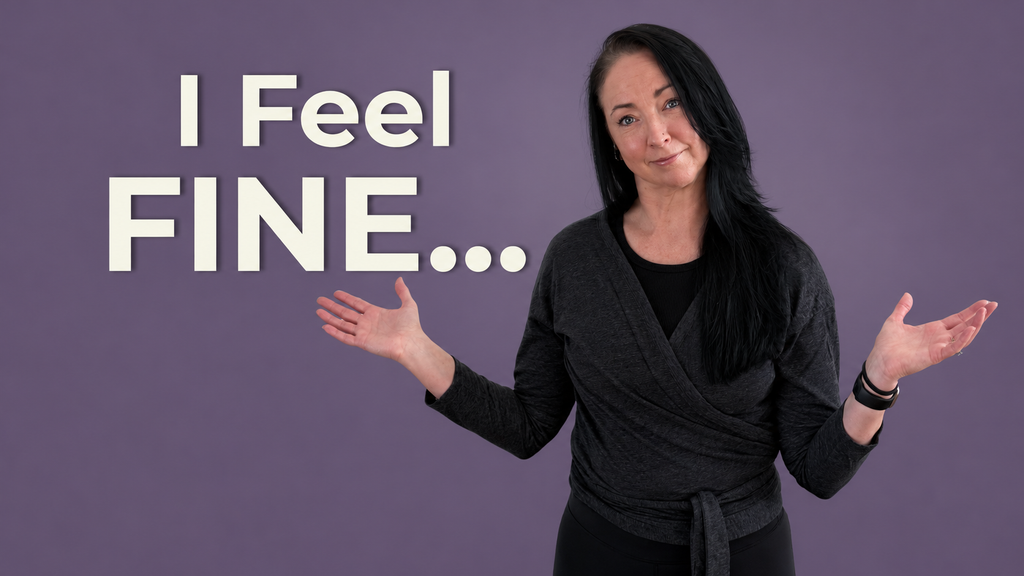
“I feel fine.”
It’s a reassuring thought—and a convincing reason to put something off.
Nothing hurts. You can do what you need to do. Whatever you’re doing seems to be working.
But some of the choices that affect our bodies don’t give us much feedback while we’re making them. Their consequences may become noticeable years later, long after the decisions themselves have faded into the background.
I think about this often because of my husband, Mike.
When “someday” becomes everyday life
Mike is a musician. When he was younger, a doctor warned him about the amount of noise he was exposing his ears to.
But he was young, working, and doing something he loved. A warning about his future hearing was competing with a life happening right in front of him.
Someday is a hard thing to take seriously when today feels completely fine.
Now he lives with hearing loss and tinnitus. His ear issues are something we’ve dealt with for a long time, and I’ve often thought about that early warning.
A consequence that once seemed distant is now part of his everyday experience.
That makes me look at my own habits and wonder: How often do I use “I feel fine” as the entire assessment of whether something deserves my attention?
🎥 Prefer to watch? Watch Your Future Body Is Living With Today’s Decisions here: YOUTUBE LINK
The things that don’t come with a deadline
We have plenty of demands on our attention. Work, family, bills, household responsibilities. The dog needs something. Someone is waiting for an answer.
Taking care of an ability we haven’t lost can slide pretty far down the list.
You put off the walk, and your day still works. You postpone building some strength, and you can still carry the groceries. There’s no immediate deadline telling you to reconsider.
One missed walk doesn’t need to become a personal failing. But “I’ll get to it later” can become a familiar pattern.
Meanwhile, we’re counting on our bodies to remain ready for whatever we eventually want to do.
As a functional movement teacher, I find this question useful:
What am I counting on my body to do in the future that I’m barely giving it a chance to do now?
Give your future life some detail
“I want to stay healthy” is understandable, but it doesn’t tell us much about what we want to participate in.
Try making it personal.
Maybe you want to dance when a song you love comes on. Take your dog down a trail just to see where it goes. Spend an afternoon exploring a new town and feel confident about the walk back to the car.
Those experiences involve abilities you can give attention to: strength, balance, stamina, and comfort moving in different ways.
You don’t have to want someone else’s fitness goals. You can begin with your own life.
What do you enjoy? What would you like to try? What everyday tasks do you want to keep managing?
The answers give your movement practice a purpose that extends beyond completing a workout.
Useful work can feel surprisingly ordinary
There isn’t always a dramatic reward for doing something that supports your future.
You finish a walk. Practice getting up from a chair. Spend some time building strength.
Then you make dinner.
No parade. No certificate announcing that you’ve done something useful for your future self.
Although I would happily accept one.
That can make these choices easy to undervalue, especially when other tasks offer such satisfying evidence of completion.
I know this from experience. I can sit at my computer far too long because there is just one more thing to finish.
The lesson is uploaded. The email is written. The box is checked.
A walk doesn’t send me a completion notification. I have to decide that it deserves time anyway.
Wanting to stay capable and regularly practicing the abilities you want to keep are two different things. The decision matters because it creates a place to begin. Following through gives that decision somewhere to go.
You can influence your future without controlling it
We don’t get complete control over how our bodies age.
Illness happens. Injuries happen. Our circumstances and access to support change. We make choices with the time, money, energy, and information available to us.
Sometimes the appropriate choice is rest, assistance, or another way of doing something.
Understanding that uncertainty can help us approach our choices with compassion. It can also leave room to ask what we can influence.
Perhaps carrying things has started to feel more difficult. Maybe you hesitate before getting down to the floor. Those observations can help you identify something you’d like support with.
You can find an appropriate starting point, ask for help, and build gradually. You can also choose to give an ability attention while it still feels comfortable.
You don’t have to wait for a crisis to make room for yourself.
I’d like her to have some options
There’s a woman who will be living in this body ten or twenty years from now.
I’d like her to have some options.
I’d like her to say yes when there’s somewhere she wants to go or something she wants to try. I hope she’s still curious about what’s around the next corner—and able to go take a look.
I can’t guarantee what her life will be like. But I can give the abilities she may want some attention today.
So here’s a question to carry into your week:
What’s one thing you want your body to keep being able to do—and how are you making room to practice it today?
Choose something specific. Something that matters to you.
Even if today feels completely fine.
Your future body is living with today’s decisions. Let’s give it something useful to work with.
If you want to know exactly what your body needs to keep doing what you love, I built a free tool for that — The EveryDay Athlete Decoder. It’s right here: https://tools.ombodies.com/auth
Similar Posts
November 16, 2026
The Hidden Cost of Making Life Easier
What a dust bunny eviction taught me about healthy aging, physical capacity, and the freedom to make our own choices. This weekend, I found myself lying on my belly underneath...
November 11, 2026
The Students You’re Overlooking: Why Yoga Teachers Need to Pay Attention to an Aging Population
What if one of the greatest opportunities for yoga teachers isn’t a new style of yoga, a trendy class format, or another certification? What if it’s an entire population of...
November 8, 2026
Doing Less or Doing Different? Why Healthy Aging Requires More Than Giving Things Up
Sometimes maintaining the life you love means changing how you do things—not abandoning them. I absolutely love running on my treadmill. But I don’t run anymore. And that wasn’t an...
November 5, 2026
Yoga Class Sequencing: What Are You Actually Preparing Your Students For?
Thoughtful yoga class sequencing isn’t just about choosing poses that flow together. It’s about understanding what you’re asking students to practice—and why. You plan a yoga class. The transitions make...
November 2, 2026
Why “I Feel Fine” Is Lying to You After 50
“I feel fine.” It’s a reassuring thought—and a convincing reason to put something off. Nothing hurts. You can do what you need to do. Whatever you’re doing seems to be...
October 29, 2026
Build It and They Will Come Is NOT a Marketing Strategy
What more than 20 years of running a yoga business taught me about hard work, marketing, and professional integrity. I spent more than twenty years running a yoga business before...
October 26, 2026
What Happens When Life Stops Challenging Your Body?
The hidden tradeoff of convenience—and why keeping your options open matters as you age. We’ve gotten remarkably good at making life easier. We invented cars so we wouldn’t have to...

October 22, 2026
Yoga Teachers: Stop Confusing Popularity With Skill
Yoga Teachers: Stop Confusing Popularity With Skill Why a full classroom isn’t proof of excellent teaching—and an empty mat isn’t proof of failure. Some of the best yoga teachers I’ve...
October 19, 2026
Why Was This Getting Harder? Maybe Discipline Wasn’t the Problem.
There was a time when I was teaching ten to eighteen yoga and Pilates classes every week. I was active. I exercised regularly. I ate well. I understood the importance...

October 15, 2026
Your Yoga Practice Is Not Your Teaching Qualification
What your personal practice demonstrates—and what it doesn’t tell us about your ability to teach. Yoga teachers, can we talk about something that’s been kinda bugging me for years? Why...